

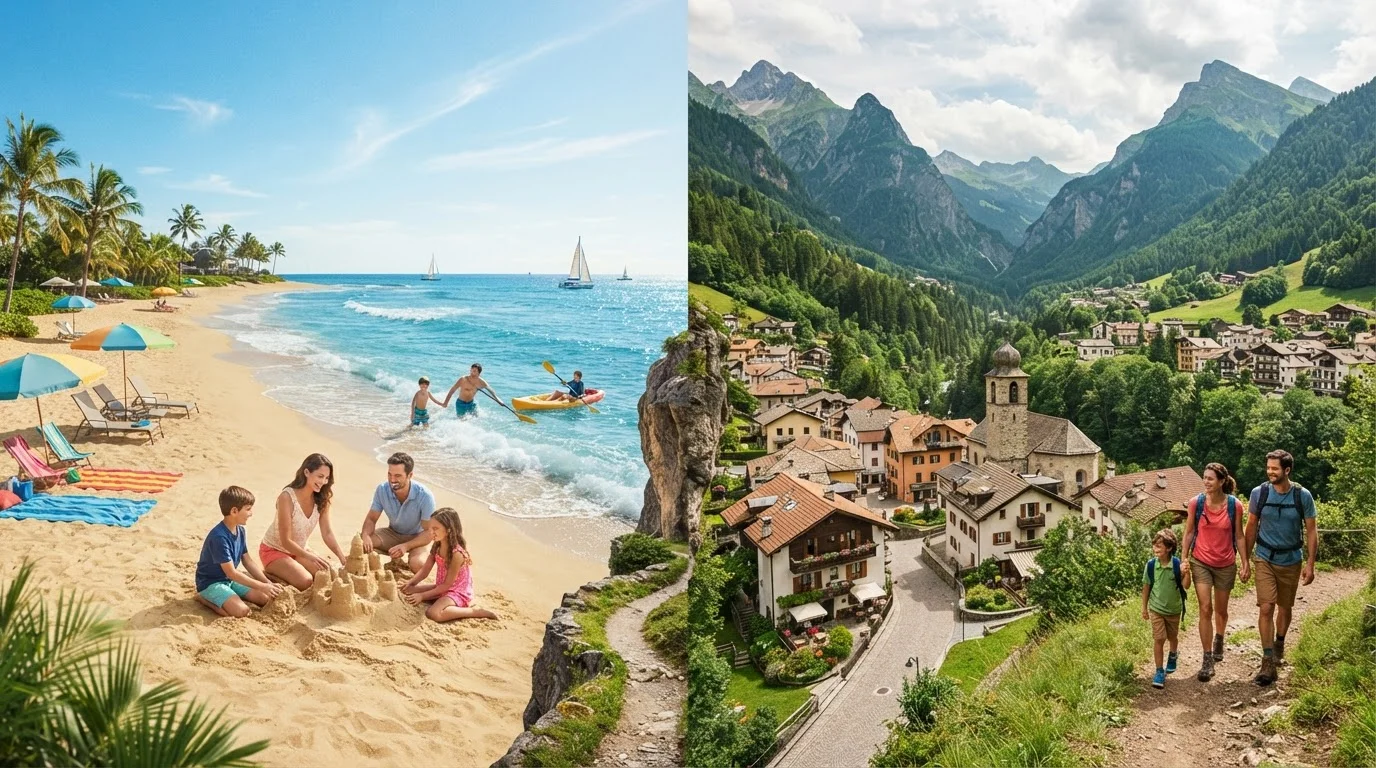
Option A
Beach Town
The sun-soaked, sand-between-your-toes classic.
Best for: Families craving easy, unstructured fun with young kids who love water play and warm weather.
Option B
Mountain Town
The cool, scenic escape built for active explorers.
Best for: Families with older kids or teens who thrive on hiking, wildlife spotting, and changing scenery.
The Core Difference in Vacation Rhythm
Beach towns and mountain towns create fundamentally different vacation moods - and knowing which one fits your family's style can save you from a mismatch that leaves everyone a little flat.
Beach vacations tend to be low-structure and sensory. The ocean is the entertainment. Kids dig in sand, chase waves, and build castles without a scheduled agenda. That spontaneity is a genuine gift when you're traveling with young children who don't do well with rigid itineraries.
Mountain vacations tend to be activity-anchored. You're usually choosing trails, planning drives, timing wildlife walks, or booking river outings. That structure suits families with older kids or teenagers who get bored without a clear "what are we doing today" answer. It can also be deeply rewarding - mountain towns often sit inside or near national forests and parks where the natural scenery alone feels like an event.
Neither rhythm is superior. The question is which one matches how your family actually relaxes - or recharges. For more ideas on keeping both types of trips affordable, see our guide to free and low-cost activities at any destination.
Costs, Crowds, and Seasonal Timing
Both settings follow similar pricing patterns: peak season means higher accommodation rates and more crowded attractions. But the peaks differ.
Beach towns hit their most expensive stretch in June through August, when school is out and coastal demand surges. Visiting in May or September can offer comparable weather in many regions with noticeably lower prices and thinner crowds. Keep in mind that some coastal areas - particularly in hurricane-prone regions - carry seasonal weather risks that are worth checking before you book.
Mountain towns have two peak windows: summer (July-August) and ski season (late December-March, depending on elevation). Spring and fall shoulder seasons are often the sweet spot for families - cooler temperatures for hiking, fewer visitors, and more affordable lodging. Renting a cabin with a kitchen is a popular strategy for keeping food costs manageable, and our breakdown of self-catering vs. all-inclusive approaches walks through when each makes financial sense.
| Criterion | Beach Town | Mountain Town |
|---|---|---|
| Best age range | All ages, especially toddlers | School-age kids and teens |
| Activity structure | Low - ocean is the activity | Higher - hikes, trails, outings |
| Peak season | June-August | July-August and ski season |
| Gear required | Minimal (sunscreen, towels) | Moderate (shoes, layers, rain gear) |
| Weather risk | Storms, heat, hurricanes (regional) | Altitude, sudden cold snaps |
| Free activity options | Good (public beaches, shoreline) | Excellent (public lands, trails) |
| Teen appeal | Moderate without water sports | Strong with active options nearby |
One underrated cost factor: gear. Beach trips generally require less specialized equipment - towels and sunscreen go a long way. Mountain trips may call for sturdy hiking shoes, layered clothing, and rain gear, particularly at higher elevations.
Kid-Friendliness Across Different Ages
Age matters a lot here. Toddlers and preschoolers tend to flourish at the beach - the sensory experience is immediate and endlessly novel. There's no need to complete a trail or follow a route. You just... arrive.
School-age kids (roughly 6-12) often love both settings, though mountains may edge ahead for this group because activities scale with ability. A 9-year-old can take on a moderate 4-mile trail that a 4-year-old simply can't, which lets older kids feel genuinely accomplished rather than just supervised.
Teenagers frequently appreciate mountain towns for the challenge, scenery, and slight sense of adventure - especially destinations with rock climbing, whitewater access, or backcountry day hikes. Beach towns can feel repetitive to teens after a day or two unless there's surfing, kayaking, or a lively boardwalk scene nearby.
One important note on mountain destinations: high altitude can affect children differently than adults. Symptoms like fatigue, headache, or nausea can appear in kids even at moderate elevations. Our detailed look at how altitude affects kids is worth reading before choosing a high-elevation destination, and consulting your pediatrician is always a smart step.
Altitude and Young Children: A Quick Note
Elevations above 6,000-8,000 feet can cause altitude-related symptoms in some children, including fatigue, headaches, and reduced appetite. Symptoms often appear within the first 24-48 hours at elevation. If you're planning a trip to a high-altitude mountain destination, talking with your child's pediatrician ahead of time is a practical and worthwhile step. This is general information only - not medical advice.
Making the Final Call
If you're still torn, run through these quick prompts: Does your youngest have reliable sleep and eating patterns away from home? (Beaches are more forgiving of disruption.) Does your family have a shared physical activity you all enjoy? (Mountains often provide a clear vehicle for that.) Are you hoping to truly unplug, or do you want a sense of exploration each day?
There's also a middle path worth considering: some destinations blend both. Coastal mountain towns - think parts of the Pacific Northwest or Maine - offer trails with ocean views and shoreline access in the same trip. That said, if it's your first time trying either style, committing to one experience fully often leads to a more satisfying trip than splitting the difference.
For families drawn to the idea of a more urban base with day-trip access to nature, our article on why small cities deserve more credit as family destinations offers a compelling alternative lens. And if you're still working out the logistics of your overall plan, our travel planning tips hub is a solid next stop.
This article provides general travel information for planning purposes. Costs, conditions, and seasonal considerations vary by specific destination and may change over time. Always verify current entry requirements, weather patterns, and health considerations - including altitude-related concerns - with official sources and qualified professionals before traveling.
The content provided on our blog site traverses numerous categories, offering readers valuable and practical information. Readers can use the editorial team’s research and data to gain more insights into their topics of interest. However, they are requested not to treat the articles as conclusive. The website team cannot be held responsible for differences in data or inaccuracies found across other platforms. Please also note that the site might also miss out on various schemes and offers available that the readers may find more beneficial than the ones we cover.