

Our Verdict
Neither structured nor unstructured play is universally superior - both serve distinct and complementary developmental purposes. The research points toward a balanced approach, where children have opportunities for guided skill-building alongside meaningful stretches of open-ended, self-directed time. Most families will find the right balance shifts naturally as children grow.
| Best for | Recommended |
|---|---|
| Building specific skills, discipline, and social cooperation | Structured Play |
| Fostering creativity, imagination, and emotional self-regulation | Unstructured Play |
| Most children across developmental stages | A Balanced Mix of Both |
| Younger children, especially toddlers and preschoolers | Primarily Unstructured Play with Light Structure |
Defining the Two Types of Play
Structured play involves adult-guided activities with defined goals, rules, or instruction - think organized sports, music lessons, art classes, or board games with assigned roles. An adult typically sets the agenda and measures progress.
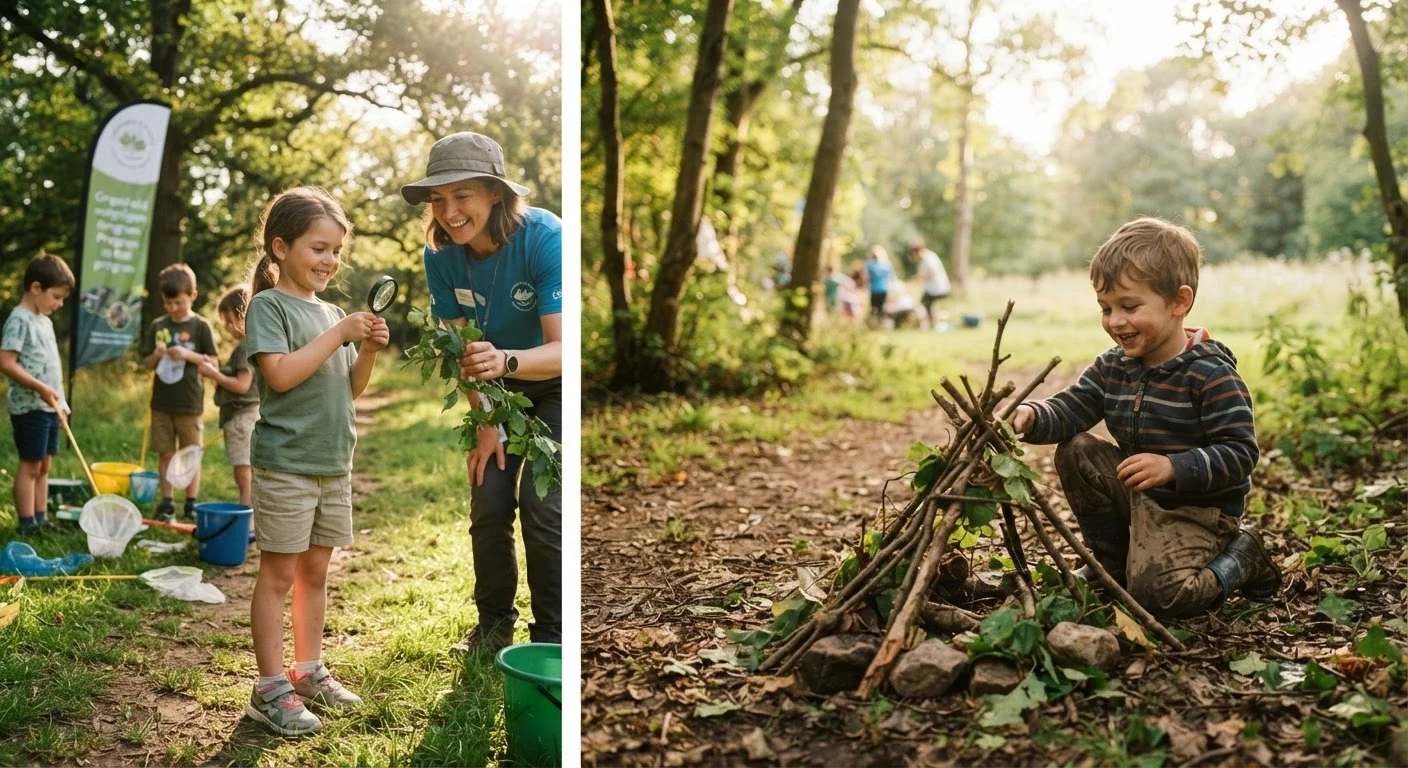
Unstructured play is child-directed and open-ended. There's no score to keep and no skill being formally taught. Children invent their own rules, follow curiosity, and decide when an activity is finished. Building a fort, imaginative role-playing, and wandering in a yard all qualify.
Both look like "play" from the outside, but they exercise different cognitive and social muscles - which is exactly why developmental researchers find value in each. For a broader picture of what children need at different ages, see our overview of early childhood milestones.
What Research Tells Us About Each Approach
Studies in developmental psychology, including work cited by the American Academy of Pediatrics (AAP), suggest that free play - particularly the unstructured variety - plays a foundational role in building executive function skills: the ability to plan, focus attention, switch mental gears, and manage impulses. When children set the terms of play themselves, they practice self-regulation in a low-stakes environment.
Structured activities, meanwhile, have been associated with gains in domain-specific skills (athletic technique, musical ability, academic readiness) and the social experience of working within a team or following a coach's guidance. Research also indicates that some degree of adult-facilitated play can scaffold learning, especially for children who benefit from more explicit instruction.
75%
Decline in children's free play time since 1970s
Research published in developmental psychology literature suggests children in the US have substantially less unstructured play time compared to previous generations.
3-5 hrs
Daily unstructured outdoor play once common in childhood
Historical observational studies note that prior generations of children typically spent several hours daily in self-directed outdoor activity.
Importantly, most researchers emphasize that these findings are correlational rather than prescriptive. The evidence doesn't support a single formula - child temperament, family culture, and community context all matter. This connects to broader conversations about children's wellbeing, including how screen time fits into the picture.
Comparing Structured and Unstructured Play
The table below outlines how both types of play compare across key developmental dimensions. Keep in mind that individual children respond differently, and these patterns reflect general research trends rather than guaranteed outcomes.
| Structured Play | Unstructured Play | |
|---|---|---|
| Who directs the activity | Adult or coach | The child |
| Primary developmental benefit | Skill-building, instruction-following | Creativity, self-regulation |
| Executive function development | Moderate, within defined rules | Strong, through self-directed decisions |
| Social skills developed | Teamwork, responding to authority | Negotiation, cooperation, conflict resolution |
| Risk of overscheduling | Higher if dominant activity type | Lower; limited only by available time |
| Best developmental window | School age and older | All ages, especially early childhood |
Finding a Realistic Balance for Your Family
The AAP has raised concern about children being overscheduled - packed calendars of back-to-back structured activities can crowd out the free time that research consistently links to healthy development. That doesn't mean fewer activities are always better; it means leaving genuine breathing room matters.
A Simple Way to Audit Your Child's Week
Look at a typical week and mark each block of time as adult-directed or child-directed. If nearly every hour has a scheduled activity, consider protecting a few blocks of genuinely open time - no agenda, no device, no assignment. Even 30-45 minutes of unstructured time daily can support the developmental benefits researchers describe. This isn't about doing less; it's about making space for a different kind of growth.
Practically, a useful starting point is observing your child. Do they light up during open-ended creative time or seem to thrive with clear goals and coaching? Most children benefit from both experiences but in proportions that suit their personality and age. Toddlers and preschoolers generally need more unstructured time, while school-age children can increasingly benefit from structured group activities - though free play remains important throughout childhood and into adolescence.
Physical activity weaves through both types of play, and age-appropriate movement guidelines are worth keeping in mind as you plan your child's week. Quality sleep also supports the cognitive benefits of play - our article on children's sleep cycles explains why rest and play work together.
This article is for general informational and educational purposes only and is not a substitute for professional medical or developmental advice. If you have specific concerns about your child's development or wellbeing, please consult a qualified healthcare provider or pediatric specialist.
The content provided on our blog site traverses numerous categories, offering readers valuable and practical information. Readers can use the editorial team’s research and data to gain more insights into their topics of interest. However, they are requested not to treat the articles as conclusive. The website team cannot be held responsible for differences in data or inaccuracies found across other platforms. Please also note that the site might also miss out on various schemes and offers available that the readers may find more beneficial than the ones we cover.