

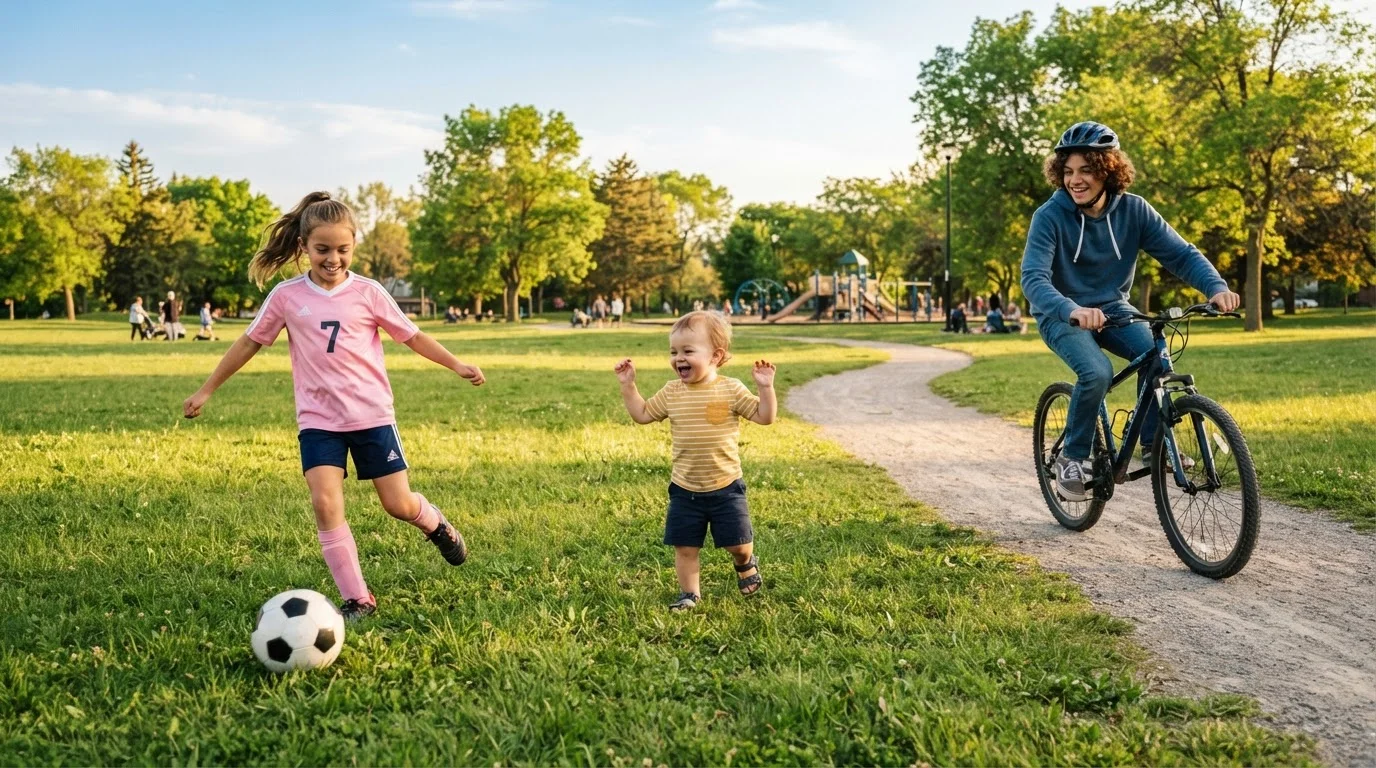
Why Activity Needs Change With Age
Physical activity isn't one-size-fits-all. A three-year-old's movement needs are fundamentally different from a thirteen-year-old's - in type, duration, and purpose. Understanding what's appropriate at each stage helps parents support healthy development without unnecessary pressure or worry.
The guidelines below are drawn from widely recognized public health frameworks, including recommendations from the U.S. Department of Health and Human Services and the American Academy of Pediatrics (AAP). They reflect general population guidance, not individualized advice. Always consult your child's pediatrician if you have specific concerns about their activity level or physical development.
| Daily activity target (ages 1-5) | 3 hours of physical activity, spread throughout the day (U.S. Physical Activity Guidelines for Americans, 2nd edition) |
| Daily activity target (ages 6-17) | 60 minutes of moderate-to-vigorous activity (U.S. Physical Activity Guidelines for Americans, 2nd edition) |
| Muscle- & bone-strengthening frequency | At least 3 days per week (ages 6-17) (U.S. Department of Health and Human Services) |
| Primary activity type for toddlers | Active free play - no structured exercise required (American Academy of Pediatrics) |
| Can activity be accumulated? | Yes - multiple shorter sessions throughout the day count (U.S. Physical Activity Guidelines for Americans) |
Physical movement during childhood supports far more than fitness. It contributes to bone density, muscle development, sleep quality, mood regulation, and cognitive function. Research consistently links regular activity in childhood to better attention, emotional resilience, and long-term mental wellbeing across the lifespan.
Age-by-Age Activity Guidance
Toddlers (Ages 1-3)
Toddlers should have at least three hours of physical activity spread throughout the day, according to current guidance. This doesn't need to be structured exercise - active free play, walking, climbing at a playground, or dancing in the living room all count. The focus is on reducing extended sedentary time (outside of sleeping).
Movement at this stage builds gross motor skills like balance and coordination. For more on what typical physical development looks like in these years, see our overview of early developmental milestones.
Preschoolers (Ages 3-5)
Preschoolers benefit from the same three-hour daily target, but with increasing emphasis on active play that is energetic - running, jumping, catching, and active games. The AAP encourages caregivers to limit screen time and prioritize physical exploration. Unstructured outdoor play is especially valuable; research on structured vs. unstructured play helps explain why both types matter.
School-Age Children (Ages 6-12)
The recommendation shifts to at least 60 minutes of moderate-to-vigorous physical activity most days, ideally daily. This should include:
- Aerobic activity (brisk walking, swimming, cycling, active sports) on most days
- Muscle-strengthening activities (climbing, gymnastics, bodyweight play) at least three days per week
- Bone-strengthening activities (running, jumping rope, team sports) at least three days per week
School sports, active recess, and after-school play all contribute. Not all activity has to happen at once - it can be accumulated across the day.
Adolescents (Ages 13-17)
Teenagers need the same 60-minute daily target as school-age children, with the same three-category breakdown. In practice, many teens fall short of this - particularly girls, and particularly as academic and social demands increase. Encouraging activities adolescents enjoy and choose themselves tends to be more sustainable than mandated exercise.
When Activity Looks Different for Some Children
Children with chronic conditions, mobility differences, or developmental disabilities can still benefit greatly from physical activity - the type and intensity may simply need to be adapted. The AAP recommends that families of children with special health needs work with their healthcare team to identify safe, appropriate activity options rather than defaulting to inactivity. Inclusion in movement, at whatever level is appropriate, supports wellbeing across the board.
Practical Guidance for Busy Families
Hitting daily targets doesn't require expensive programs or dedicated gym time. Here are approaches families find realistic:
- Active transportation - walking or cycling to school when safe contributes meaningfully to daily totals.
- Family activity - evening walks, weekend hikes, or backyard games fulfill adult and child needs simultaneously.
- Limit sedentary stretches - breaking up long periods of sitting (homework, screens) with short movement breaks benefits concentration too.
- Let children lead - children who choose activities they enjoy are more likely to stay active over time.
Physical activity and nutrition work together to support healthy growth. Our article on common nutritional gaps in children's diets covers the dietary side of that equation. Your child's annual well-child visit is also a good opportunity to discuss activity levels with your pediatrician, especially if you're unsure whether your child is getting enough movement for their age and health status.
This article provides general health information for educational purposes and is not a substitute for personalized medical advice. Please consult your child's healthcare provider for guidance specific to your child's needs.
The content provided on our blog site traverses numerous categories, offering readers valuable and practical information. Readers can use the editorial team’s research and data to gain more insights into their topics of interest. However, they are requested not to treat the articles as conclusive. The website team cannot be held responsible for differences in data or inaccuracies found across other platforms. Please also note that the site might also miss out on various schemes and offers available that the readers may find more beneficial than the ones we cover.