

Our Verdict
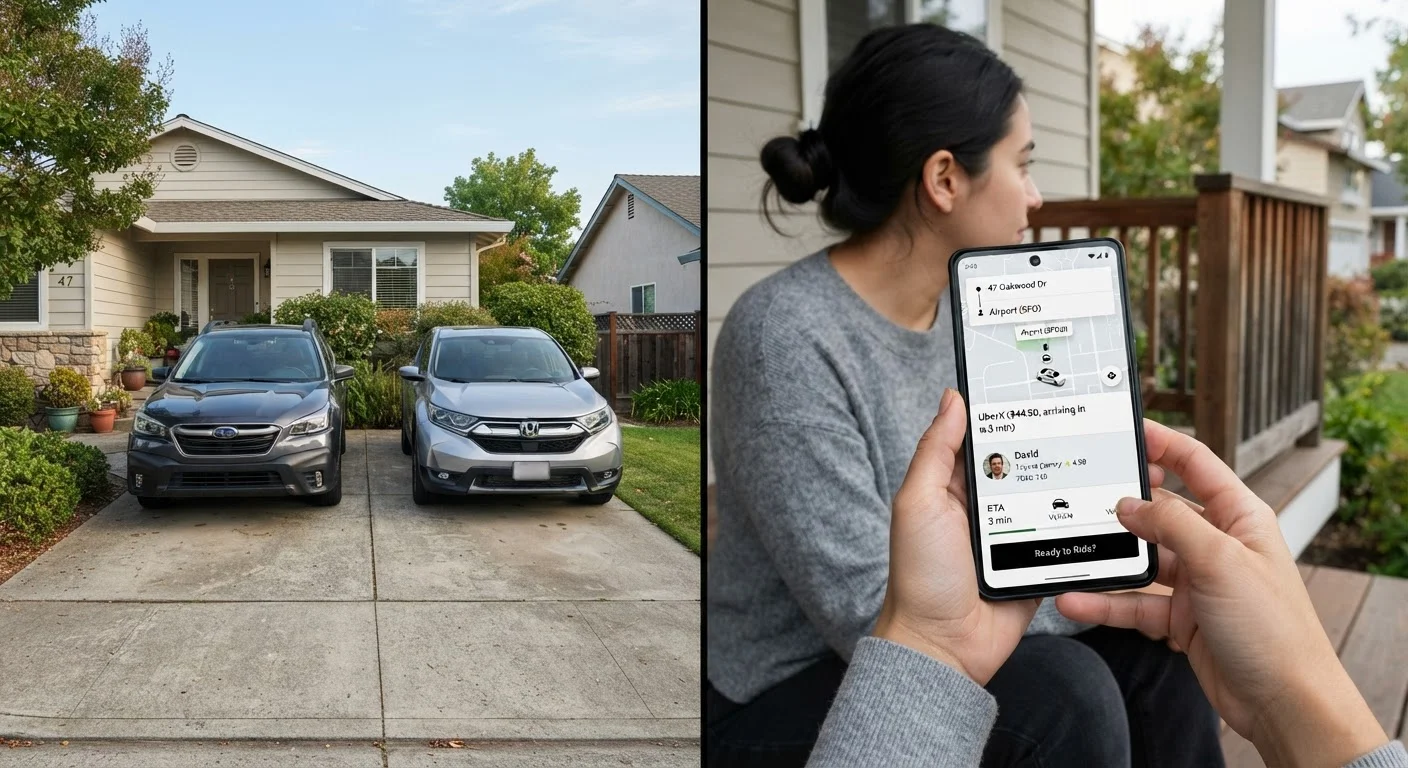
A second car makes clear financial sense when it's driven heavily and alternatives are genuinely impractical. For families whose second vehicle sits idle for significant portions of the day or week, the fixed costs rarely justify the convenience premium. Running the actual numbers - not just the monthly payment - is the only reliable way to decide.
Families seriously weighing whether their second car earns its keep, or those recently relocated who haven't yet committed to a second vehicle purchase.
The True Cost of a Second Car Most Families Miss
When families think about what a second car costs, the monthly loan or lease payment is usually the number that comes to mind. It's the most visible line item. But it's typically less than half the real cost.
The full picture of annual second-car ownership includes:
- Depreciation: Often the single largest cost, averaging $2,000-$4,000 per year on a moderately priced used vehicle.
- Insurance: Adding a second vehicle to a policy typically adds $1,200-$2,000 annually depending on state, vehicle type, and driver profile.
- Fuel: At current average prices, a car driven 10,000 miles per year with 28 mpg averages roughly $1,300-$1,600 in fuel costs.
- Maintenance and repairs: Even a reliable car runs $500-$1,000 per year in routine upkeep, and older vehicles can easily exceed that.
- Registration, taxes, and fees: Varies widely by state but averages $200-$600 annually.
Add it together and most second vehicles cost families somewhere in the $8,000-$12,000 range per year - even without a car payment. For context on how these costs stack up across a car's lifetime, see the complete financial guide to car ownership we've put together for families.
$12,182
Average annual cost to own a new vehicle
According to AAA's annual Your Driving Costs study, total vehicle ownership - including depreciation, insurance, fuel, and maintenance - averages over $12,000 per year for a new car.
~8,000 mi
Approximate break-even annual mileage vs. ridesharing
Financial analysts generally estimate that below roughly 8,000-10,000 miles per year, ridesharing can match or undercut the all-in cost of second-car ownership in most U.S. markets.
15%
Of household budget spent on transportation
The U.S. Bureau of Labor Statistics Consumer Expenditure Survey consistently places transportation as the second-largest household spending category, averaging around 15% of after-tax income.
What Ridesharing Actually Costs at Real-World Usage Levels
Rideshare pricing varies significantly by city, time of day, and surge conditions - so a single number doesn't apply universally. But the math at moderate usage levels is instructive.
If a family uses a rideshare service for, say, two round trips per weekday - a school pickup and an evening errand - at an average of $14 per trip, that's roughly $560 per month, or $6,700 per year. Add occasional weekend trips and the annual spend might reach $8,000-$9,000.
That's in the same ballpark as a second car at lower mileage - but with a critical difference: rideshare costs scale directly with usage. A second car's fixed costs (insurance, registration, depreciation) don't. They run whether the car moves or not.
This is where the break-even analysis matters. Families whose second car sits in the driveway five days a week and is used mainly for one parent's occasional commute or weekend runs are often paying full ownership cost for part-time utility.
Geography Changes the Equation Significantly
Ridesharing is a viable alternative mainly in metro areas and large suburbs with consistent driver availability. In rural communities or smaller towns, coverage is spottier and wait times longer - which shifts the break-even point considerably. Families in those areas should weight the availability factor heavily when running their own comparison. Urban families, by contrast, may have more transit and rideshare options than they're currently using.
Pros of Keeping a Second Car
There are genuine advantages to having a second vehicle that ridesharing can't replicate in every situation.
Always available - no waiting or surge pricing
A second car is ready on your schedule regardless of time, weather, or local rideshare demand. This reliability matters most during peak hours or in areas with thin rideshare coverage.
Lower per-trip cost at high annual mileage
When a second car is driven 15,000+ miles per year, the fixed costs spread across enough trips that the per-mile cost can undercut ridesharing - particularly in rural or suburban areas where fares run higher.
Accommodates car seats and family gear easily
Families with young children face real friction using rideshares, which typically don't include car seats and require installation time. A personal vehicle sidesteps this entirely.
No surge pricing during high-demand periods
Rideshare pricing can double or triple during storms, events, or rush hours. A second car costs the same to drive regardless of external demand conditions.
Can carry cargo and multiple passengers freely
Grocery runs, sports equipment, or transporting a group of kids requires a vehicle with capacity - ridesharing is less practical for high-load or multi-stop trips.
These advantages are most meaningful in areas with limited rideshare availability, households with young children who need car seats, or families managing complex, time-sensitive schedules where waiting for a driver isn't realistic. See also how emotional and habitual factors quietly inflate family car spending.
Cons of the Second Car: Where the Economics Break Down
For families honest about their actual usage patterns, a second car's drawbacks can outweigh its conveniences.
Fixed costs run regardless of how much you drive
Insurance, registration, and depreciation accrue every month whether the car moves or not. A lightly used second car can easily cost $500-$700 per month in fixed expenses alone.
Depreciation quietly erodes vehicle value
Most vehicles lose a significant portion of their value in the first several years of ownership. Depreciation is a real cost that doesn't appear on any monthly bill, making it easy to overlook.
Maintenance adds unpredictable expense
Two vehicles mean two sets of tires, two sets of brakes, two timing belts, and double the potential for unexpected repair bills - a particular risk with older second vehicles.
Ties up capital that could be deployed elsewhere
The purchase price of a second car represents a significant lump sum (or ongoing debt obligation) that could otherwise reduce other financial pressures or be directed toward savings.
Parking, storage, and logistics overhead
In cities or densely populated suburbs, a second vehicle requires dedicated parking - either paid or through housing selection - adding indirect cost and logistical friction.
Families who want to reduce vehicle costs without compromising reliability may find value in extending the life of a single primary vehicle rather than maintaining two ageing cars.
The Hybrid Approach: Rideshare Plus Targeted Rentals
Many families find the most cost-effective answer sits between the two extremes. Dropping the second car doesn't mean committing exclusively to ridesharing - it means building a flexible transport toolkit.
A practical hybrid approach might include:
- Ridesharing for predictable, routine trips (daily commute, school runs on off days)
- Day or weekend car rentals for situations that require a vehicle - hauling gear, road trips, or visits to areas without good rideshare coverage
- Occasional car-sharing services for medium-length errands
Families who travel with children will want to think through seat logistics for rentals and rideshares, which is a real but manageable friction point. For longer trips, the real cost comparison between road trips and flights may also inform how much you actually need a second car versus other transport alternatives.
The key is tracking what you'd actually spend across a year, not just estimating. Families who've tried this approach often find that honest accounting significantly changes how necessary the second car feels.
The content provided on our blog site traverses numerous categories, offering readers valuable and practical information. Readers can use the editorial team’s research and data to gain more insights into their topics of interest. However, they are requested not to treat the articles as conclusive. The website team cannot be held responsible for differences in data or inaccuracies found across other platforms. Please also note that the site might also miss out on various schemes and offers available that the readers may find more beneficial than the ones we cover.