

Start here
How EV Ownership Costs Differ From Gas-Powered Cars
Next
What Gets Cheaper With an EV
Then
What Stays Roughly the Same
Watch out for
Costs That Can Be Higher With an EV
Bring it together
How to Think About Total Cost of Ownership
How EV Ownership Costs Differ From Gas-Powered Cars
Switching to an electric vehicle doesn't eliminate the cost of owning a car - it reshapes it. The money flows differently: less at the pump and the repair shop, more at the dealership and potentially on your electricity bill. Understanding that shift is what lets families make a genuinely informed decision rather than reacting to a headline number.
Car ownership involves many layers of cost beyond the purchase price. With an EV, those layers don't disappear - they rearrange. Some shrink considerably, some stay about the same, and a few are unique to electric vehicles entirely. This guide walks through each category so you know what to expect.
Total cost of ownership (TCO)
The combined cost of purchasing and operating a vehicle over its entire lifespan, including fuel, maintenance, insurance, depreciation, and financing.
Regenerative braking
A system in electric and hybrid vehicles that converts braking energy back into electricity, extending brake pad life and recovering range.
Level 2 charging
Home or public charging using a 240-volt outlet that adds roughly 15-30 miles of range per hour, significantly faster than a standard household outlet.
Battery warranty
A manufacturer guarantee covering the EV's battery pack for a defined period (typically 8 years or 100,000 miles), protecting against premature capacity loss or failure.
Depreciation
The loss in a vehicle's monetary value over time, which is one of the largest ownership costs regardless of whether the car runs on gas or electricity.
What Gets Cheaper With an EV
Fuel costs are the most immediate and predictable saving. Electricity costs less per mile than gasoline for the vast majority of U.S. drivers, and home charging - done overnight on standard rates - is even cheaper than public fast charging. The exact savings depend on local electricity prices and how efficient the vehicle is, but the directional advantage is consistent. For a detailed comparison across drivetrains, see how fuel costs compare over a vehicle's lifetime.
Routine maintenance drops substantially. Electric motors have far fewer moving parts than internal combustion engines. There's no engine oil, no oil filter, no spark plugs, no timing belt, and no exhaust system to service. Regenerative braking - where the motor slows the car and recaptures energy - also extends brake pad life significantly. Typical EV maintenance is limited to tires, cabin air filters, wiper blades, and periodic checks of brake fluid and coolant.
Track Your Current Fuel and Maintenance Spend
Before comparing an EV to your current vehicle, add up what you actually spend on gas and maintenance over a year. Many families find the real number is higher than they assumed. This baseline makes EV savings projections far more meaningful and grounded in your household's actual usage.
What Stays Roughly the Same
Several ownership costs are largely unaffected by what powers the vehicle. Registration and licensing fees are set by state and local governments and apply to all vehicles; some states do charge EVs an additional annual fee to offset lost fuel-tax revenue, so it's worth checking your state's rules.
Parking, tolls, and car washes are identical. Tire wear can actually be slightly higher on EVs due to the added weight of battery packs and the instant torque delivery, so budget accordingly. And while collision and comprehensive insurance typically mirrors what you'd pay for a comparable gas vehicle, premiums for EVs can run modestly higher - repair costs for specialised components tend to be elevated.
Depreciation also remains a significant cost for any vehicle. EV resale values are still settling as the market matures and technology evolves rapidly, making this a category worth researching for any specific model you're considering.
Costs That Can Be Higher With an EV
Purchase price is the most visible difference. EVs generally carry a higher sticker price than equivalent gas vehicles, though federal tax credits (currently up to $7,500 for qualifying new vehicles, subject to income and vehicle eligibility rules) can narrow that gap. State incentives vary widely. This is general information - consult a tax professional regarding your specific eligibility.
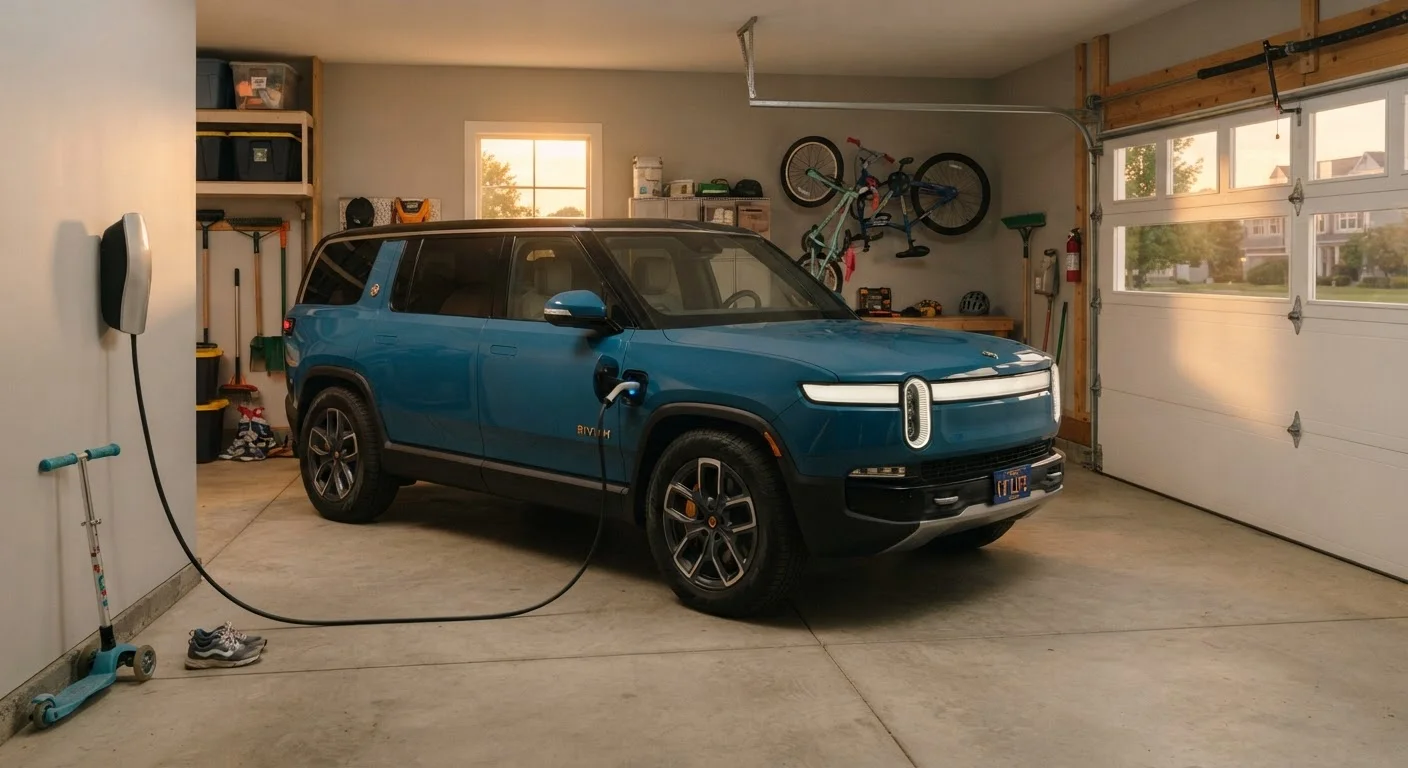
Home charging equipment is a one-time cost many buyers overlook. A standard 120V outlet (Level 1 charging) works but is slow - adding roughly 3-5 miles of range per hour. Most families find a Level 2 charger (240V) worth installing, which typically costs $500-$1,500 for the unit plus professional installation. Electrical panel upgrades, if needed, add further cost.
Battery longevity and replacement risk is the big unknown. Manufacturers generally warrant EV batteries for 8 years or 100,000 miles, providing meaningful protection during that window. Beyond it, a degraded or failed battery pack is an expensive repair. Checking the battery warranty and understanding degradation expectations for any model you're considering is an important part of due diligence.
Don't Skip the Home Electrical Assessment
Before purchasing an EV, have a licensed electrician assess your home's electrical panel. Some older homes require panel upgrades to support a Level 2 charger, which can add $1,000-$3,000 or more to your setup costs. Factor this in before finalising your budget - it's a cost that surprises many first-time EV buyers.
How to Think About Total Cost of Ownership
No single number captures EV economics for every family. Annual mileage, local electricity and gas prices, available incentives, and how long you plan to keep the vehicle all shift the calculation materially. A family driving 15,000 miles a year in a high-electricity-cost city will see different numbers than one driving 8,000 miles annually in an area with cheap power.
The most useful approach is to estimate your own numbers: what you currently spend on fuel and maintenance, versus projected EV equivalents for your specific situation. Families frequently underestimate ongoing running costs, and an EV purchase is no exception - the savings are real, but so are the upfront costs and the variables. For a comprehensive framework covering every financial dimension of car ownership, the Car Costs & Savings guide for families is a useful companion resource.
Understanding the full picture - what changes and what doesn't - puts your family in a much stronger position to decide whether an EV fits your budget and lifestyle, rather than relying on marketing claims in either direction.
Frequently Asked Questions
For many families, EVs cost less per mile to run once you factor in lower fuel and maintenance costs. However, the higher purchase price means it can take several years of driving before overall savings materialise. The break-even point depends on how much you drive and local energy costs.
Yes, meaningfully so. EVs have no engine oil to change, no transmission fluid, no timing belt, and fewer moving parts overall. Brakes also last longer due to regenerative braking. You still need tire rotations, cabin air filters, and coolant checks.
Cost depends on your local electricity rate and your vehicle's efficiency. As a general estimate, charging at home typically costs the equivalent of paying well under $2 per gallon of gasoline, though rates vary significantly by region and time of day.
Insurance premiums for EVs tend to run somewhat higher than comparable gas vehicles, partly due to higher repair costs for specialised components. The gap varies by insurer, model, and your driving record, so it's worth getting quotes before purchasing.
Battery replacement is the largest potential repair cost for an EV - estimates typically range from several thousand to over $15,000 depending on the vehicle. Most manufacturers offer battery warranties covering 8 years or 100,000 miles, which provides significant protection for many families.
Depreciation patterns for EVs are still evolving. Some models have depreciated quickly due to rapid technology changes and price cuts from manufacturers; others hold value well. As with any vehicle, researching the specific model's resale history is worthwhile before buying.
The content provided on our blog site traverses numerous categories, offering readers valuable and practical information. Readers can use the editorial team’s research and data to gain more insights into their topics of interest. However, they are requested not to treat the articles as conclusive. The website team cannot be held responsible for differences in data or inaccuracies found across other platforms. Please also note that the site might also miss out on various schemes and offers available that the readers may find more beneficial than the ones we cover.