

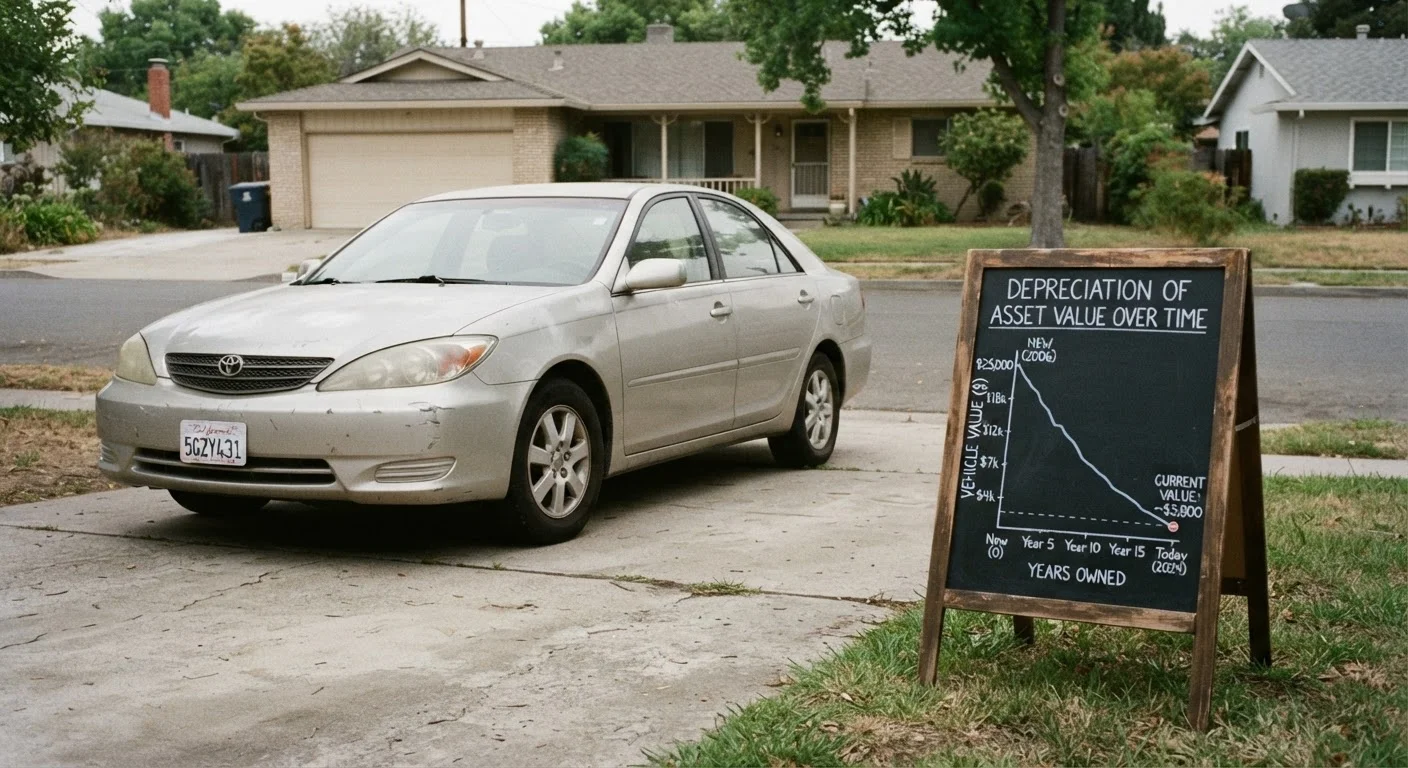
Why Depreciation Hits So Hard and So Fast
The moment a new car leaves the lot, it is no longer a new car - and the market prices it accordingly. That status change alone can account for a significant portion of early value loss, even before the vehicle accumulates a single mile of wear. Industry data consistently shows that new vehicles lose roughly 15% to 25% of their value within the first year, and around 50% or more over five years, though the exact figures vary considerably by vehicle type and market conditions.
For families, this matters in a direct, practical way. If you purchase a vehicle for $40,000 and it is worth $30,000 a year later, you have absorbed $10,000 in depreciation - regardless of whether you ever plan to sell. That money is gone. It's not visible on a monthly budget spreadsheet the way a car payment or insurance premium is, which is why it's so frequently overlooked. As part of the true cost of owning a car, depreciation often dwarfs every other expense category.
20%
Average first-year value loss for new vehicles
Automotive valuation sources broadly estimate new cars lose approximately 20% of their value within the first 12 months of ownership.
~50%
Value lost over five years on average
Most new vehicles retain only around half their original value by the end of year five, according to general industry depreciation data.
#1
Depreciation's rank among car ownership costs
For many new-vehicle owners, depreciation exceeds fuel, insurance, and maintenance as the largest single annual cost of ownership.
What Drives Depreciation Rates
Not all vehicles depreciate at the same rate. Several factors determine how quickly a specific car loses value:
- Mileage: Higher mileage signals more wear and reduces resale value. Average annual mileage in the US is roughly 12,000-15,000 miles; vehicles driven significantly above that depreciate faster.
- Condition: Dents, interior damage, and deferred maintenance all reduce what a buyer will pay. This is one reason routine car maintenance has a direct financial payback - not just in reliability but in retained value.
- Market demand: Vehicles in high demand (certain trucks, SUVs, and hybrid models) tend to hold value better than those with oversupply or flagging consumer interest.
- Brand reputation for reliability: Models associated with long-term dependability consistently show stronger resale numbers.
- Trim level and features: Well-equipped vehicles in popular configurations typically depreciate more slowly than stripped-down or unusual spec combinations.
External factors - including fuel prices, economic conditions, and shifts in consumer preference - can also accelerate or slow depreciation in ways that are difficult to predict.
How Depreciation Interacts With Your Car Loan
Depreciation becomes especially consequential when a car loan is involved. Standard amortization schedules front-load interest payments, meaning the loan balance drops slowly in the early years - precisely when the car is losing value most rapidly. This mismatch creates the risk of negative equity, where you owe more than the car is worth.
Families who make a small down payment, choose a long loan term (72 or 84 months is now common), or roll negative equity from a previous vehicle into a new loan are particularly exposed. If the car is totaled or needs to be sold during this period, the shortfall comes out of pocket. This financial dynamic is explored in more depth in our look at why families often spend more on cars than intended.
Practical Ways to Manage Depreciation's Impact
You cannot stop depreciation, but you can make decisions that reduce its financial weight on your household:
- Buy slightly used: Purchasing a vehicle that is two to four years old means the steepest depreciation has already occurred on the previous owner's watch. Our detailed breakdown of buying new vs. used walks through how this looks over time.
- Keep the car longer: The longer you own a vehicle, the more years of use you extract from a fixed purchase price. Extending a vehicle's life without excessive maintenance costs is a genuine strategy for reducing per-year ownership expense.
- Put down a meaningful down payment: A larger down payment reduces the gap between loan balance and vehicle value, lowering negative equity risk.
- Avoid excessive mileage where possible: If your household has two vehicles, strategic use can help keep higher mileage on the car you plan to keep longest.
- Maintain the vehicle well: Service records and documented upkeep meaningfully support resale value.
Depreciation is not something to fear - it's simply a cost to understand and factor into your decisions, the same way you would budget for fuel or insurance. Families who treat it as a real number in their ownership math are better positioned to make choices that hold up financially over time.
“Depreciation is the cost of convenience - you're paying a premium to have a new car rather than a slightly older one. Understanding that cost is the first step to managing it.”
— Cars & Driving Editorial Team, Automotive finance and ownership cost specialists
Frequently Asked Questions
Most new vehicles lose between 15% and 25% of their purchase price within the first 12 months of ownership. This steep drop is primarily driven by the transition from "new" to "used" status and the arrival of newer model-year vehicles on the market.
Vehicles with strong reputations for reliability, high demand, and limited supply tend to hold their value better. Trucks, certain SUVs, and models with a loyal following often depreciate more slowly than average. For general guidance, checking published residual value data from automotive research sources can help.
Yes, because depreciation affects what you owe versus what your car is worth - a gap that becomes critical if you need to sell, refinance, or file an insurance claim. It also directly informs whether your total ownership cost represents good value for your household.
Negative equity - sometimes called being "underwater" on a loan - occurs when you owe more on your car loan than the vehicle is currently worth. It often results from rapid early depreciation combined with a low down payment or a long loan term.
Regular maintenance preserves the vehicle's condition and service history, both of which influence resale value. A well-maintained car with documented service records will generally command a higher price than a neglected one of the same age and mileage.
Buying a used vehicle lets you avoid the steepest early-depreciation curve, since the first owner absorbs that loss. However, used vehicles may carry higher maintenance costs and fewer warranty protections. The right choice depends on your budget, driving needs, and risk tolerance.
The content provided on our blog site traverses numerous categories, offering readers valuable and practical information. Readers can use the editorial team’s research and data to gain more insights into their topics of interest. However, they are requested not to treat the articles as conclusive. The website team cannot be held responsible for differences in data or inaccuracies found across other platforms. Please also note that the site might also miss out on various schemes and offers available that the readers may find more beneficial than the ones we cover.