

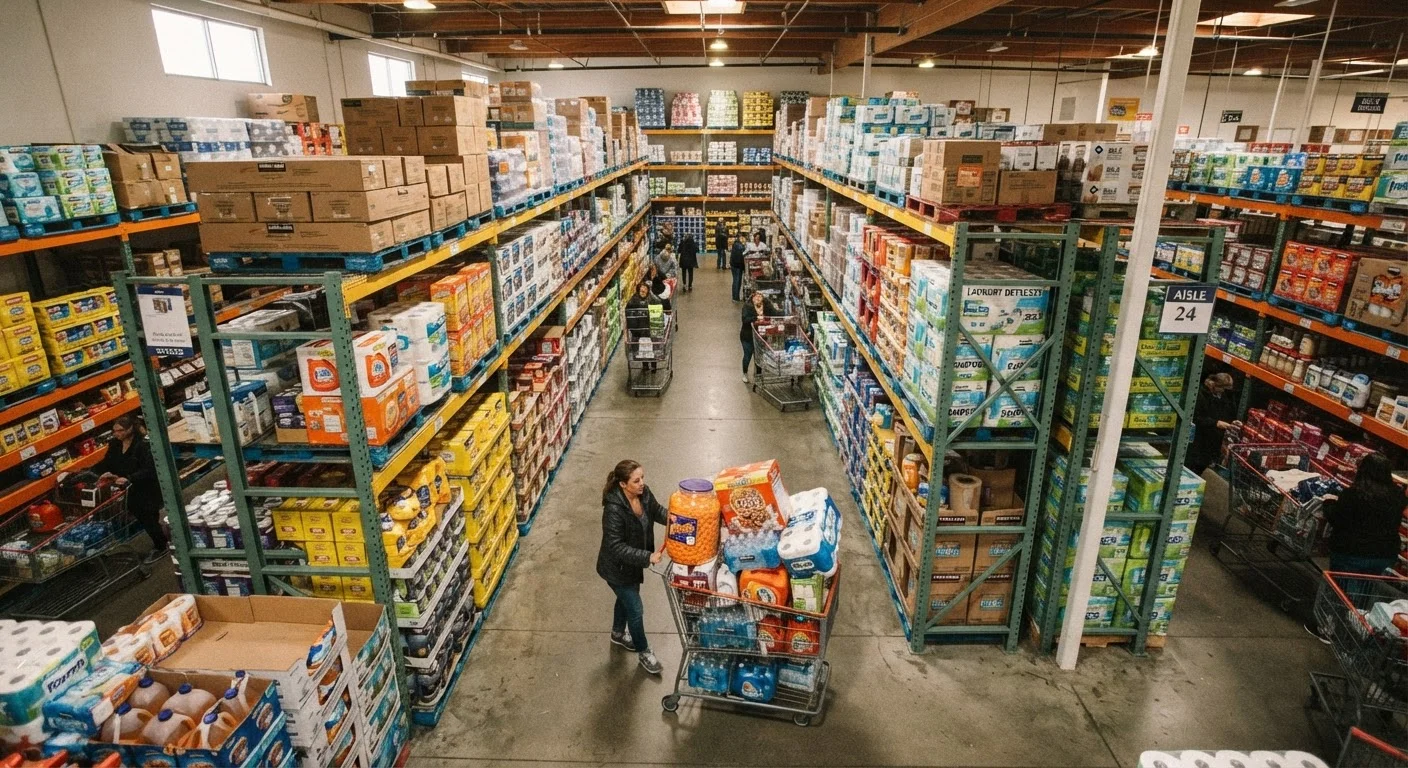
The Bulk Buying Promise - and Where It Breaks Down
The appeal is straightforward: buy more, pay less per unit, repeat. Warehouse clubs and big-box grocery stores have built entire business models around this logic, and for certain households and certain products, it genuinely holds up. But the gap between a lower per-unit price and actual money saved is wider than most families realize.
Understanding where grocery money actually goes is the first step. Spoilage, impulse purchases driven by perceived deals, and storage overhead are among the most common budget drains - and bulk buying can amplify all three.
Myth
Buying in bulk always saves money because the per-unit price is lower.
Fact
A lower per-unit price only translates to savings when the entire quantity is actually used - spoilage and waste erase the discount.
The per-unit price is a starting point, not a guarantee. For perishable foods, households routinely discard a portion of bulk purchases before they're consumed. The USDA has estimated that American families throw away a significant share of the food they buy. If you pay 30% less per ounce but discard a third of the package, you've effectively paid more per ounce of food actually eaten. Unit pricing labels give you the raw per-unit number, but only your household's real usage rate determines whether that number works in your favor.
Myth
Warehouse clubs always offer the lowest prices on any given product.
Fact
Warehouse clubs frequently beat regular supermarkets, but not consistently - and membership fees must be counted as part of the total cost.
Consumer research consistently shows that warehouse clubs win on some categories (paper goods, cooking oils, nuts) and lose on others (certain canned goods, seasonal produce, name-brand cereals on sale). Prices also shift with manufacturer promotions at conventional grocery stores. A family that pays a $65 annual membership but realistically saves only $40 on products has lost money on the deal. Our companion article on warehouse club membership vs. regular supermarket shopping walks through how to run that comparison honestly.
Myth
Stocking up is always the responsible, budget-savvy move for a family.
Fact
Over-purchasing ties up cash that could be used more flexibly, and it creates hidden storage costs families rarely account for.
Spending $180 on a pallet of paper towels might represent a genuine per-unit saving, but that $180 is now unavailable for other needs until you work through the supply. For families managing tight cash flow, large lump-sum purchases - even discounted ones - can create short-term financial strain. There's also the overlooked cost of physical storage: rented storage units, shelving, or lost usable living space all carry real costs. Deal-hunting habits that backfire explores how well-intentioned savings strategies can quietly push budgets in the wrong direction.
Myth
Bigger packages always contain more product for less money.
Fact
Retailers and manufacturers occasionally price large packages higher per unit than medium sizes - a practice sometimes called 'size illusion.'
Shoppers instinctively assume that a larger container means a better deal, and manufacturers know it. Studies in consumer behavior have found instances where the jumbo size costs more per ounce than the regular size sitting right beside it on the same shelf. The only reliable defense is checking the shelf's unit price label - the small print that shows cost per ounce, per count, or per sheet. Never assume; always check. This is especially common during promotional periods when a mid-size product is on sale but the large format is not.
Myth
Non-food items like cleaning supplies or toiletries are always safe to buy in bulk.
Fact
Many non-food products have shelf lives or degrade in storage, meaning bulk quantities can still result in waste.
Sunscreen loses efficacy after its expiration date. Certain cleaning products, when stored in non-climate-controlled spaces (garages, outdoor sheds), can separate or degrade. Batteries slowly self-discharge over time. Even toilet paper stored improperly in a humid area can absorb moisture and become less usable. The category of 'non-perishables' is broader and more forgiving than food - but it isn't unlimited. Before buying a three-year supply of anything, check the product's stated shelf life and consider where you'll actually store it.
How to Tell When Bulk Buying Actually Makes Sense
None of this means bulk buying should be avoided entirely. For the right products and the right households, it remains one of the most effective ways to reduce per-unit costs on everyday essentials.
The Math Only Works If Nothing Goes to Waste
The core promise of bulk buying is a lower cost per unit. But that figure assumes 100% of the product gets used. Every item thrown away - expired food, dried-out cleaning supplies, stale snacks nobody liked - raises your real per-unit cost, sometimes above what a regular store would have charged. Before buying large quantities, honestly estimate your household's actual consumption rate.
The categories where bulk buying tends to deliver real savings share common traits: long shelf life, consistent household demand, and no quality degradation in storage. Dry staples (rice, dried beans, oats), paper products, canned goods, and some frozen items generally meet those criteria. Fresh produce, baked goods, dairy, and niche specialty items generally do not.
Membership Fees Change the Equation
Warehouse club memberships typically cost $50-$65 or more per year. If you shop infrequently or only buy a handful of items in bulk, those fees can erode - or entirely eliminate - the savings you expected. Always calculate savings after subtracting the prorated membership cost before concluding a bulk purchase was a good deal.
A practical habit: before adding any bulk item to your cart, estimate how long it will realistically take your household to finish it, check that date against the expiration label, and verify the per-unit price against what you'd pay for a regular-size package at a conventional store. That three-step check takes under a minute and catches most bulk-buying mistakes before they happen. For a broader look at when bulk purchasing helps versus hurts, see our guide on buying in bulk - when it saves families money and when it doesn't.
The content provided on our blog site traverses numerous categories, offering readers valuable and practical information. Readers can use the editorial team’s research and data to gain more insights into their topics of interest. However, they are requested not to treat the articles as conclusive. The website team cannot be held responsible for differences in data or inaccuracies found across other platforms. Please also note that the site might also miss out on various schemes and offers available that the readers may find more beneficial than the ones we cover.