

Our Verdict
Convenience products genuinely deliver on their core promise - less time, less planning, and less decision fatigue. The financial cost is real, but for families with limited weeknight hours, selective use of ready-made meals or pre-cut produce can be a reasonable trade-off. The key is conscious, targeted use rather than defaulting to convenience across the entire grocery cart.
Families with demanding schedules who want to avoid frequent takeout, reduce food waste on specific ingredients, or lower the friction of weeknight cooking without abandoning home meals entirely.
What You're Actually Paying for With Convenience Products
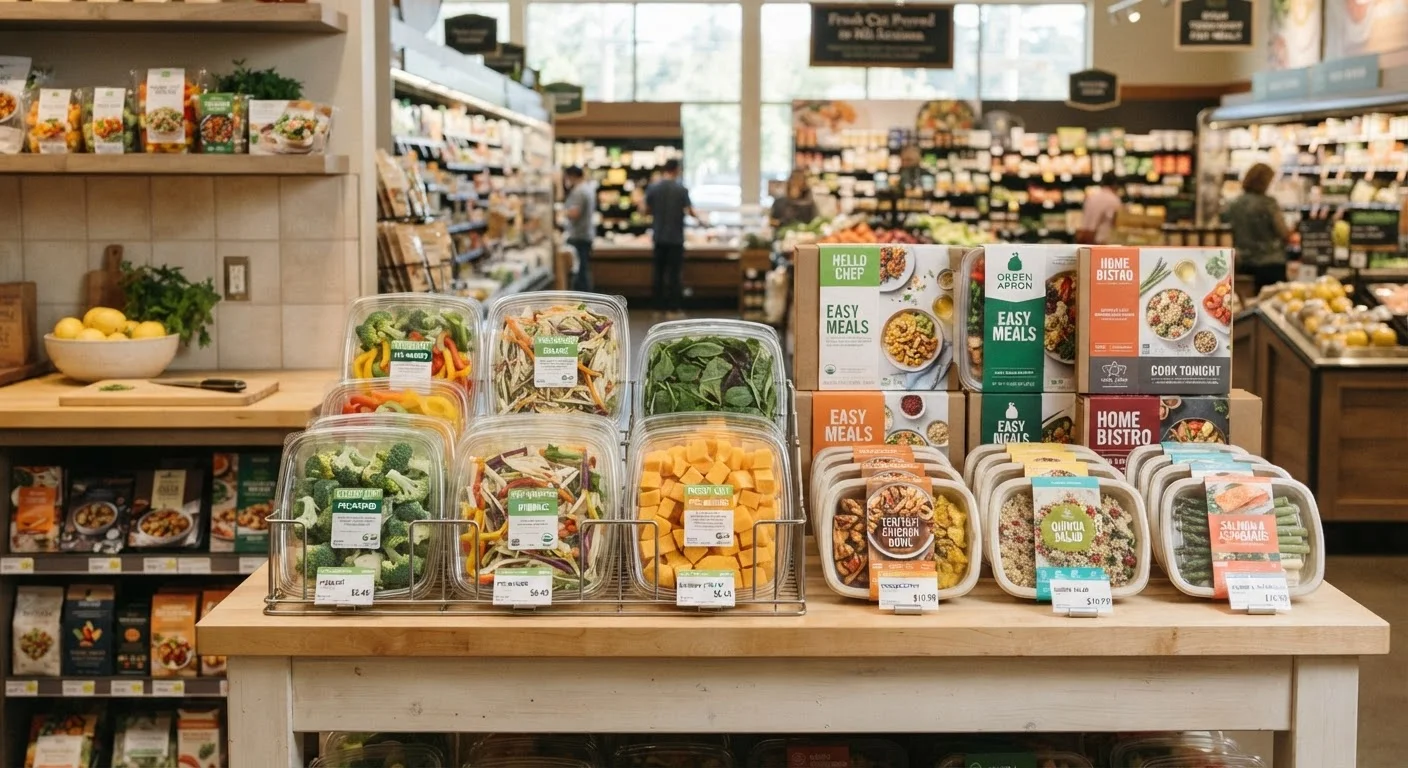
Convenience foods - ready-made meals, pre-cut produce, and meal kit delivery services - are essentially paying someone else for labor, packaging, and logistics. When you buy pre-diced butternut squash instead of a whole one, you're not just buying squash; you're buying the labor to peel and cut it, the packaging to store it, and the cold-chain handling to deliver it safely. That bundle has a real cost.
Consumer data consistently shows pre-cut produce can cost two to four times more per pound than the whole equivalent. A single ready-made rotisserie-style dinner from a grocery deli runs two to three times what the raw ingredients would cost. Meal kit services, depending on the plan, typically price meals at $8-$12 per serving - often more than scratch cooking but less than a sit-down restaurant.
Understanding what you're paying for is the first step to deciding whether it's worth it. See our guide to unit pricing and hidden costs to sharpen your ability to compare sticker prices with true per-meal costs.
Dramatically reduces weeknight meal preparation time
Pre-cut produce and ready-made components can cut active cooking time from 45 minutes to under 15. For families navigating after-school activities and work schedules, this is a meaningful reduction in daily stress.
Reduces food waste on hard-to-use-up produce
Buying a pre-portioned amount of an ingredient you only need once - say, diced mango or julienned carrots - avoids the scenario where you buy a whole item, use a third, and discard the rest.
Meal kits support recipe variety and cooking confidence
Pre-portioned ingredients with step-by-step instructions lower the barrier to trying unfamiliar cuisines and techniques, which can gradually expand a family's home cooking repertoire.
Competitive alternative to frequent restaurant or takeout spending
When evaluated against the cost of delivery apps or sit-down dining, ready-made grocery meals and meal kits often represent meaningful savings, especially for larger families.
Consistent portion control for household planning
Pre-packaged and kit-based meals make it easier to plan exactly how much food to prepare, reducing both guesswork and over-cooking.
The Real Drawbacks Families Often Overlook
The most underestimated downside of convenience products isn't the price - it's the spoilage gap. Pre-cut produce has a significantly shorter shelf life than whole vegetables because the cutting process exposes more surface area to air and bacteria. A whole head of broccoli lasts up to two weeks refrigerated; pre-cut florets may lose quality in three to four days. For busy families who shop once a week, this window can easily be missed.
Meal kit services introduce a subscription dynamic that can feel easy to overlook. Skipping weeks, pausing, or canceling often requires deliberate action, and families who aren't actively managing their plan may pay for boxes they barely use. Packaging waste is another real consideration - most kits generate substantial single-use plastic and insulation material that complicates recycling.
Ready-made meals also tend to carry more sodium, preservatives, and added sugars than home-cooked equivalents. For families managing dietary goals, this matters beyond just the budget. Examining where grocery money actually goes often reveals that convenience categories are a larger line item than families realize.
Significant price premium over whole-ingredient shopping
Pre-cut produce routinely costs two to four times more per pound than its whole equivalent. Across a full week of grocery shopping, this premium can add $30-$60 or more to a family's bill.
Shorter shelf life increases spoilage risk
Cut produce degrades faster due to increased surface area exposure. Families who don't use pre-cut items within a few days may end up discarding them, negating both the cost and the convenience.
Meal kit subscriptions require active management
Skipping or canceling deliveries typically requires logging in and taking deliberate steps. Families who don't stay on top of their plan can pay for boxes that arrive during busy or travel weeks.
Higher sodium and additive content in ready-made meals
Pre-made grocery meals often contain elevated sodium levels and preservatives compared to home-cooked food, which may be a consideration for families managing blood pressure or dietary goals.
Substantial single-use packaging waste
Meal kits in particular generate significant plastic, foam, and ice pack waste per delivery. Many of these materials are not accepted in standard curbside recycling programs.
Habitual use can mask the true cost of convenience
When convenience products become a default rather than a deliberate choice, families often underestimate how much they're spending in this category relative to their total grocery budget.
How to Use Convenience Products Without Blowing Your Budget
The families who get the most value from convenience foods tend to be strategic rather than habitual about them. A few practical approaches worth considering:
- Target the high-friction items. Some ingredients - peeled garlic, shredded cabbage, spiralized zucchini - take disproportionate prep time relative to their cost savings when bought whole. These are better convenience purchases than, say, pre-sliced apples where the whole version keeps longer and costs far less.
- Use meal kits for variety, not volume. A one-box-per-week plan can introduce new recipes without replacing your entire grocery shop. This contains the cost while still capturing the recipe-discovery benefit.
- Compare prepared meals to takeout, not scratch cooking. When the realistic alternative is ordering delivery, a grocery store ready-made meal at $8-$12 often looks competitive. The comparison changes when you're deciding between it and cooking from scratch.
- Track expiration dates actively. Pre-cut produce should go into that week's first two or three dinners, not pushed to the back of the fridge.
For a broader framework on evaluating when spending more upfront makes sense, the longevity vs. low cost framework applies here in useful ways. Also consider how convenience foods compare to buying staples in bulk - the two strategies can complement each other when applied to the right categories.
2-4×
Price premium for pre-cut vs. whole produce
Consumer pricing comparisons across major US grocery chains consistently show pre-cut vegetables and fruit cost two to four times more per pound than their whole equivalents.
$8-$12
Typical meal kit cost per serving
Most major US meal kit services price individual servings in this range, depending on the plan size and any promotional pricing in effect.
3-4 days
Average shelf life of pre-cut produce
Pre-cut vegetables and fruit typically remain at peak quality for only a few days after purchase, compared to one to two weeks for many whole equivalents stored properly.
The content provided on our blog site traverses numerous categories, offering readers valuable and practical information. Readers can use the editorial team’s research and data to gain more insights into their topics of interest. However, they are requested not to treat the articles as conclusive. The website team cannot be held responsible for differences in data or inaccuracies found across other platforms. Please also note that the site might also miss out on various schemes and offers available that the readers may find more beneficial than the ones we cover.