

The Coverage You Can Usually Count On
Standard manufacturer warranties - often called limited warranties - typically cover defects in materials and workmanship for a defined period. In plain terms: if something breaks because it was made incorrectly, the manufacturer is generally on the hook. This applies across most product categories, from household appliances to car components to children's gear.
For major home appliances, coverage periods commonly run one year on parts and labor, with some manufacturers extending coverage on specific components (compressors, motors, heating elements) for longer periods. Vehicle warranties in the U.S. typically follow a parts-and-labor structure for a set number of years or miles, whichever comes first. Electronics warranties usually clock in at one year.
Federal law also provides a baseline: the Magnuson-Moss Warranty Act requires that any written warranty on a consumer product over $15 be labeled clearly as either "full" or "limited," and it prohibits manufacturers from voiding your warranty simply because you used a third-party part or service - with some narrow exceptions.
For a broader look at coverage language across financial products, travel insurance policy breakdowns offer a useful parallel. The structure - what's in, what's out, and what requires documentation - is strikingly similar.
What Warranties Quietly Exclude
This is where most families get surprised. Warranty exclusions are usually buried in subsections and written in passive voice for a reason - they shrink coverage significantly. Here are the most common categories of what's typically not covered:
- Normal wear and tear. Batteries, filters, seals, and finishes degrade with use. Most warranties explicitly exclude these, even within the coverage window.
- Cosmetic damage. Scratches, dents, or discoloration that don't affect function are almost universally excluded.
- Misuse or improper installation. If the product wasn't installed per the manufacturer's instructions - or was used in a way the manual warns against - the claim will likely be denied.
- Environmental or accidental damage. Flood, power surge, drops, spills, and similar events fall outside standard manufacturing defect coverage. Separate product protection plans (sometimes called "accidental damage" coverage) address this, but at added cost.
- Failure to maintain. Warranties on vehicles and appliances frequently require documented routine maintenance. Skipping scheduled service can give a manufacturer grounds to deny a claim. Routine maintenance logs are worth keeping for exactly this reason.
Maintenance Records Can Make or Break a Claim
Many vehicle and appliance warranties include a clause requiring proof that the product was maintained according to the manufacturer's schedule. If you can't show a service record, the manufacturer may argue the failure resulted from neglect rather than a defect. Keep receipts, service invoices, and any digital maintenance logs in a dedicated folder - physical or cloud-based - for every major purchase.
Understanding what isn't covered is just as important as knowing what is. See how extended warranties and exclusion clauses work before deciding whether to purchase additional protection.
Reading a Warranty Before You Need It
A few targeted questions cut through most warranty documents in under five minutes:
- What exactly triggers coverage? Look for the words "defect in materials or workmanship." If the document only says "malfunction," find out what that means specifically.
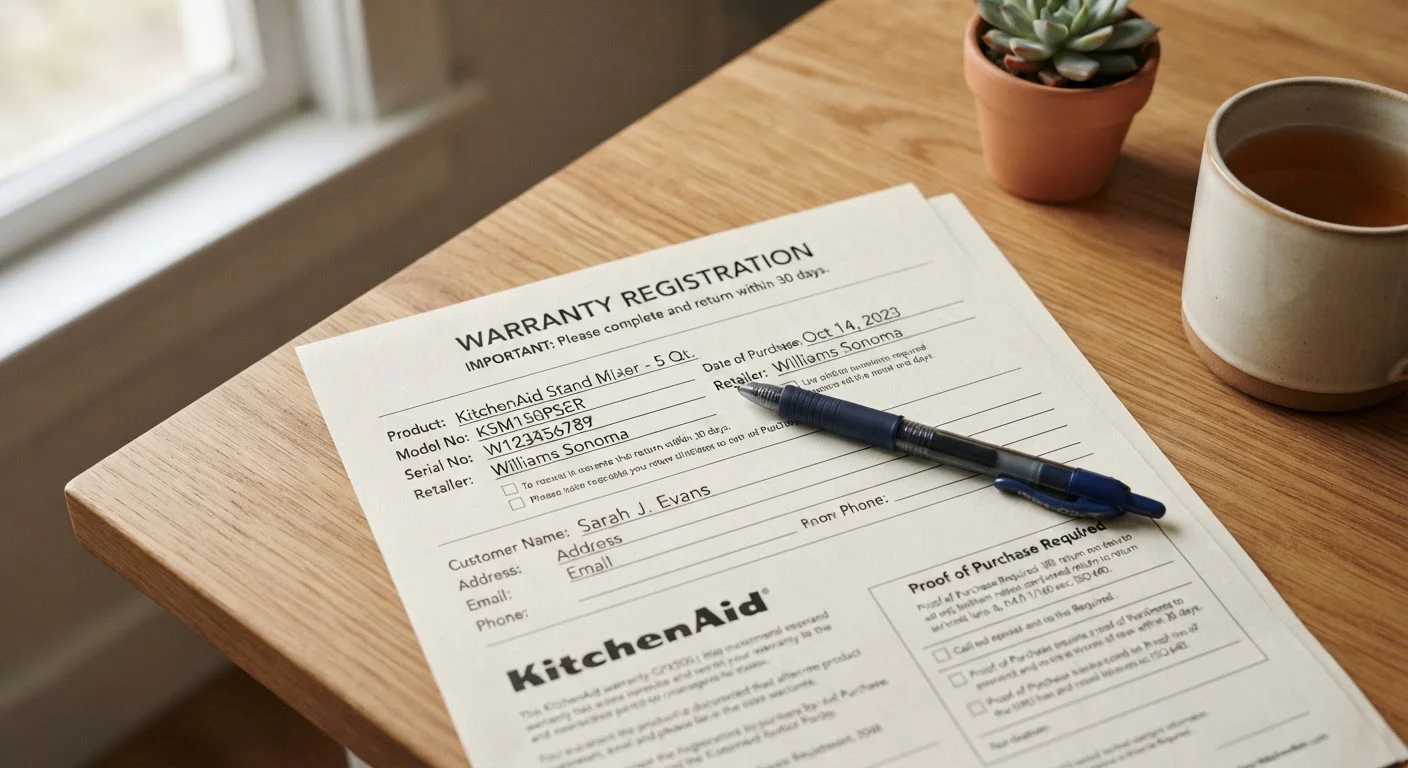
- What are the claim procedures? Some warranties require you to register within 30 days of purchase. Others require you to ship the product at your expense. Missing a procedural step can void an otherwise valid claim.
- Who handles service - the manufacturer or an authorized third party? This affects repair speed, parts quality, and your options if service is unavailable in your area.
- Is the warranty transferable? This matters if you sell the product or move. Some home appliance and vehicle warranties transfer to new owners; many don't.
Return policies are the shorter-term cousin of warranties, and they interact with warranty rights in ways most shoppers don't anticipate. How return policies work and why they matter is worth reviewing alongside any warranty document before a major purchase.
For families weighing big-ticket items, warranty terms are one factor among several. Which appliance specs actually matter and how financing terms work round out the picture before signing anything.
This article provides general consumer information and is not legal advice. If you have a specific warranty dispute, consider consulting a consumer protection attorney or your state attorney general's office.
The content provided on our blog site traverses numerous categories, offering readers valuable and practical information. Readers can use the editorial team’s research and data to gain more insights into their topics of interest. However, they are requested not to treat the articles as conclusive. The website team cannot be held responsible for differences in data or inaccuracies found across other platforms. Please also note that the site might also miss out on various schemes and offers available that the readers may find more beneficial than the ones we cover.