

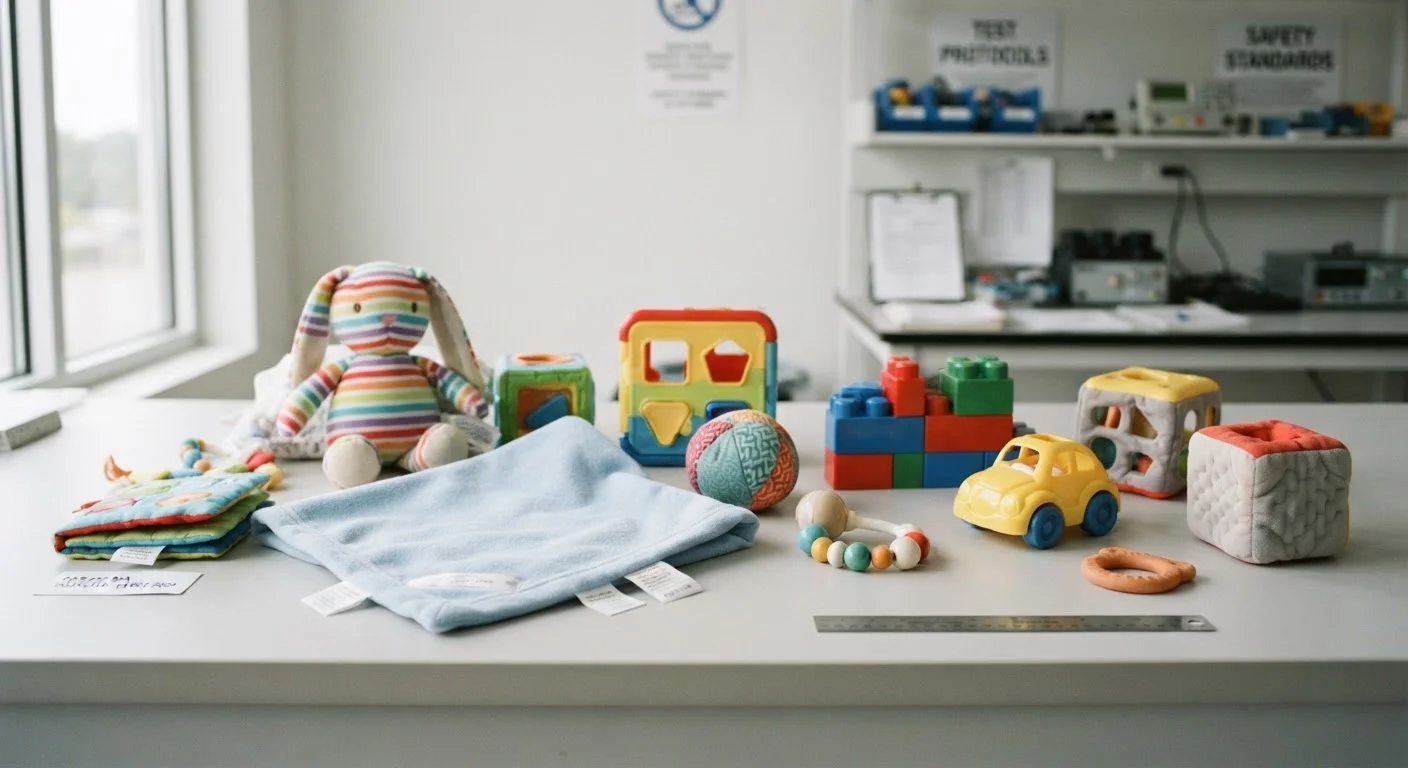
Why Material Composition Matters for Children
Children face greater exposure risks from certain materials than adults do - pound for pound, they breathe more air, consume more food relative to body weight, and are more likely to mouth objects. That biological reality means the materials in their toys, bedding, clothing, and furniture deserve closer scrutiny than adult products typically receive.
The concern isn't that every product is dangerous. Most children's items sold in the U.S. are subject to federal safety regulations enforced by the Consumer Product Safety Commission (CPSC). The issue is that regulations evolve, enforcement isn't uniform, and imported goods don't always meet domestic standards. Understanding which materials carry documented risks - and what the evidence actually says - helps parents ask sharper questions before purchasing.
For a structured way to apply this knowledge before any purchase, see our family safety checklist.
| U.S. lead limit in children's products | 100 ppm (substrate material) (CPSC, Children's Safe Products Act framework) |
| Phthalates restricted in U.S. children's products | 8 specific types above 0.1% (Consumer Product Safety Improvement Act (CPSIA)) |
| Primary toy safety standard (U.S.) | ASTM F963 (Mandatory standard enforced by CPSC) |
| Formaldehyde classification | Known human carcinogen (at sustained high exposure) (National Toxicology Program, U.S. Dept. of Health and Human Services) |
| "Non-toxic" label status | No standardized U.S. legal definition (Federal Trade Commission general guidance) |
Key Chemical Concerns by Material Type
Different materials carry different risk profiles. Here's what the research and regulatory record shows:
Plastics and Phthalates
Phthalates are plasticizers added to polyvinyl chloride (PVC) to make it soft and flexible - common in bath toys, inflatable items, and some teethers. Several phthalates are classified as endocrine disruptors, meaning they may interfere with hormone function. The CPSC has prohibited eight phthalates in children's toys and child care articles above 0.1% concentration. When evaluating soft plastic items, look for "phthalate-free" labeling or products certified under standards that restrict them.
Lead and Heavy Metals
Lead was largely phased out of paint decades ago, but it still appears occasionally in imported products, jewelry, and older items purchased secondhand. Federal law limits lead in children's products to 100 parts per million in the substrate. Cadmium - another heavy metal - has appeared in some low-cost metal jewelry. Inexpensive metal accessories and painted items warrant the most caution, particularly from unverified sellers.
Formaldehyde in Textiles and Wood Products
Formaldehyde is used as a finishing agent in some wrinkle-resistant fabrics and as a binder in pressed-wood products like cribs and furniture. It's a known respiratory irritant and classified as a human carcinogen by health authorities at high, sustained exposure levels. In children's products, the concern centers on off-gassing in enclosed spaces. Look for low-VOC or GREENGUARD Gold-certified furniture and pre-washed organic textiles where possible.
Flame Retardants
Certain halogenated flame retardants - once standard in children's foam products, mattresses, and car seats - have been linked to neurodevelopmental concerns. Regulations have shifted significantly, and many are now restricted or phased out. However, the regulatory landscape is complex; not all replacement chemicals have the same evidence base. Certifications like GOTS (Global Organic Textile Standard) and OEKO-TEX STANDARD 100 restrict many of these substances.
Phthalates
A family of chemical plasticizers used to soften PVC plastics. Several types are classified as endocrine disruptors and are restricted in U.S. children's products above certain concentration thresholds.
Off-gassing
The release of volatile organic compounds (VOCs) from materials into the surrounding air over time. Common in new furniture, foam, and some textiles; most pronounced in poorly ventilated spaces.
Endocrine Disruptor
A chemical that may interfere with the body's hormone systems. Children are considered more vulnerable to these substances due to their developmental stage.
OEKO-TEX STANDARD 100
An independent certification for textiles that tests for a defined list of harmful substances. Products bearing this label have been tested at every stage of production.
GREENGUARD Gold
A third-party certification for products like furniture and building materials that verifies low chemical emissions, with stricter thresholds designed specifically for children's environments.
ASTM F963
The primary U.S. safety standard for toys, covering mechanical, chemical, and flammability hazards. Compliance is mandatory for toys sold in the United States.
Reading Labels and Certifications Accurately
Labels can be reassuring or misleading depending on what they actually cover. "Non-toxic" is a marketing term with no standardized legal definition in the U.S. - it tells you very little on its own. "BPA-free" addresses one specific chemical but says nothing about phthalates, lead, or other concerns.
More meaningful indicators include CPSC compliance marks, ASTM F963 (the U.S. toy safety standard), and third-party certifications like OEKO-TEX or GREENGUARD Gold for textiles and furniture. These involve actual testing against defined substance lists. Our article on what safety ratings actually mean breaks down what these marks do - and don't - guarantee.
Secondhand purchases require extra diligence. Older products may predate current regulations, and certification stickers can be removed or faded. Check the CPSC recall database before buying used children's items - our guide to verifying product recalls walks through that process step by step.
This Article Is General Information Only
The material risks described here reflect publicly available regulatory and research findings. They are not a substitute for professional health advice. If you have concerns about a specific product or your child's exposure to a substance, consult a qualified healthcare provider. For product-specific safety questions, contact the CPSC directly at cpsc.gov.
The content provided on our blog site traverses numerous categories, offering readers valuable and practical information. Readers can use the editorial team’s research and data to gain more insights into their topics of interest. However, they are requested not to treat the articles as conclusive. The website team cannot be held responsible for differences in data or inaccuracies found across other platforms. Please also note that the site might also miss out on various schemes and offers available that the readers may find more beneficial than the ones we cover.