

Why Leash Pulling Is So Common - and So Misunderstood
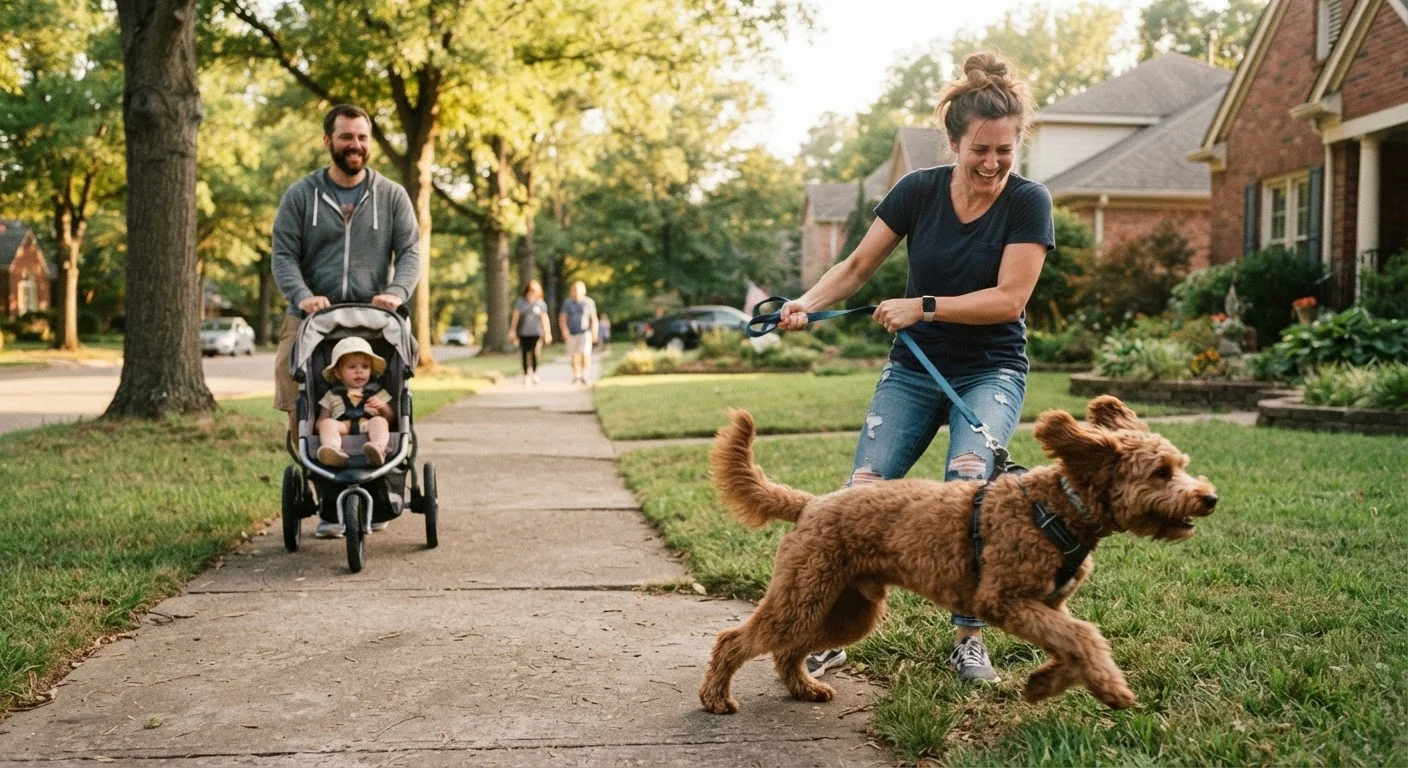
If your dog drags you down the block every morning, you're far from alone. Leash pulling is one of the most common complaints among family dog owners, and it's also one of the most misunderstood. Many families assume their dog is being stubborn, dominant, or defiant. In most cases, none of those things are true.
Dogs pull because the world outside smells extraordinary, moves unpredictably, and offers constant novelty. Their natural pace is also faster than ours. Walking calmly beside a human on a six-foot leash is genuinely unnatural for them - it's a skill that has to be taught, patiently and consistently. When it hasn't been taught clearly, pulling simply works: the dog moves forward, the leash stretches, and the walk continues. That outcome is rewarding enough to repeat thousands of times.
Understanding this helps families shift their approach. You're not correcting bad behavior so much as teaching an entirely new one. That framing matters, because it changes which strategies you reach for - and which ones you stop using. If you've been wondering whether some of your instincts might be working against you, our guide to common pet training myths is worth a read alongside this one.
Building Leash Manners That Actually Stick
Once you've identified the mistakes holding your walks back, the path forward becomes clearer. Loose-leash walking is taught in small steps, not in one exhausting session. Begin in the least distracting environment you can find - your backyard, a quiet hallway, or an empty parking lot. Ask your dog to walk beside you for just a few steps, reward generously the moment the leash stays slack, and gradually increase distance as your dog succeeds.
80%
Of dog owners report leash pulling as a problem
Survey data from the American Pet Products Association and various veterinary behaviorists consistently rank leash manners among the top owner concerns in the US.
5-10 min
Ideal daily loose-leash practice session length
Veterinary behaviorists generally recommend multiple short, focused sessions over one long walk, as dogs retain skills better with spaced repetition.
Consistency across the whole family is non-negotiable. Decide together on a single side your dog will walk on, a single cue word, and a single response to pulling (stopping or changing direction). When every person who holds the leash follows the same rules, your dog gets a clear picture of what's expected.
If your dog's pulling is severe, a front-clip harness can reduce forward momentum without causing discomfort - but treat it as a management tool that supports your training, not a substitute for it. Progress will plateau if you rely on equipment alone.
Walks that go well reinforce the dog's good behavior and the family's confidence. Over time, those calm, connected walks become the norm rather than the exception. For families with young children in the mix, pairing leash manners with broader impulse-control work pays dividends - our article on teaching dogs to stay calm around young children covers that ground in detail.
If Pulling Is Sudden or Accompanied by Lunging
A dog that begins pulling suddenly after previously walking calmly - especially if the behavior involves lunging, growling, or fixating on specific triggers - may be showing signs of leash reactivity rather than simple pulling. Leash reactivity has different roots and generally benefits from guidance from a certified professional dog trainer or veterinary behaviorist. Don't assume it will resolve with standard loose-leash techniques alone.
The content provided on our blog site traverses numerous categories, offering readers valuable and practical information. Readers can use the editorial team’s research and data to gain more insights into their topics of interest. However, they are requested not to treat the articles as conclusive. The website team cannot be held responsible for differences in data or inaccuracies found across other platforms. Please also note that the site might also miss out on various schemes and offers available that the readers may find more beneficial than the ones we cover.