

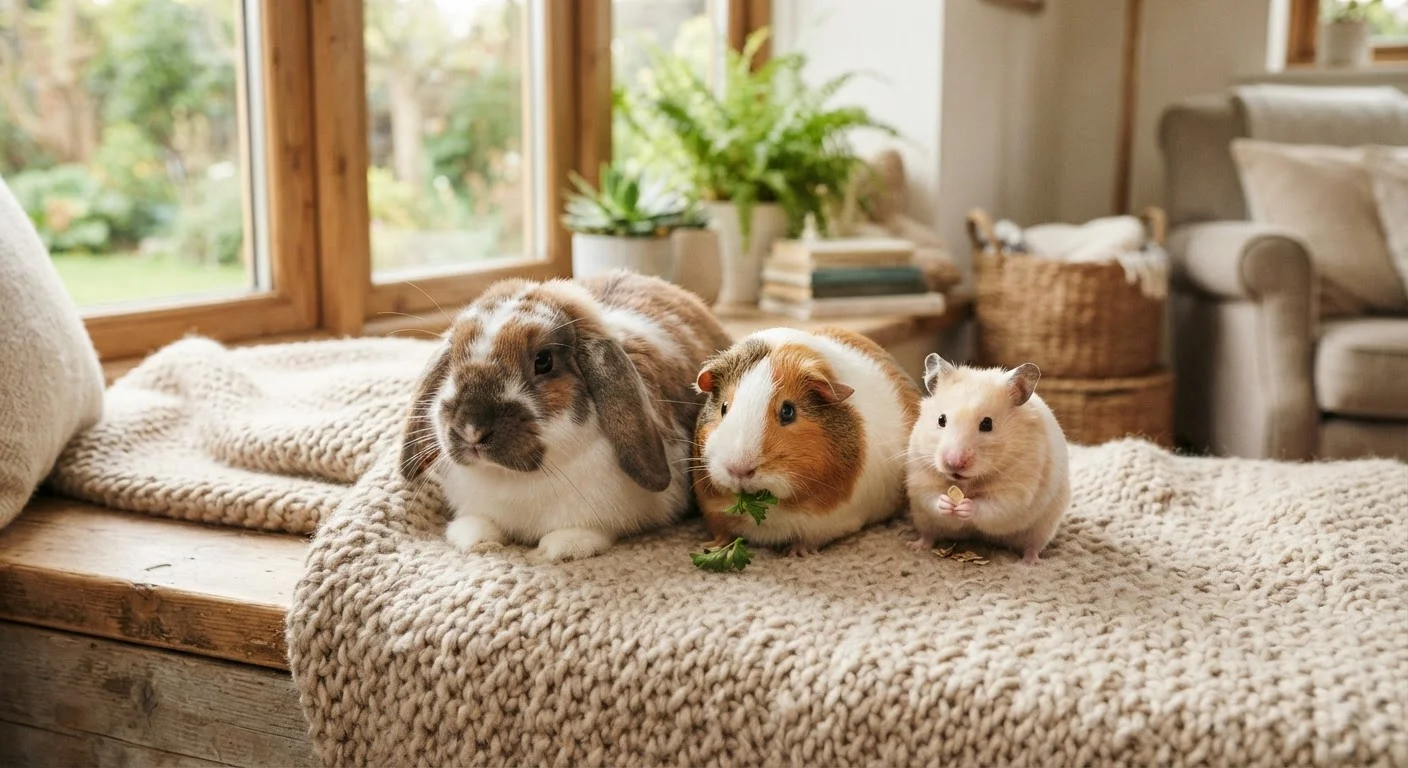
Our Verdict
No small pet is truly hands-off, but each species fits a different household rhythm. The right choice depends less on size and more on your family's schedule, noise tolerance, and capacity for daily interaction. Carefully matching species to lifestyle leads to a happier animal and a more rewarding experience for everyone involved.
| Best for | Recommended |
|---|---|
| Families with younger children seeking a gentle, social companion | Guinea Pigs |
| Older children or teens who want an independent but engaging pet | Rabbits |
| Households with limited space and quieter, evening-oriented routines | Hamsters |
| Families comfortable committing to a longer-term small-pet relationship | Rabbits |
Why 'Easy Pet' Is Often a Misconception
When families picture a small pet, they often picture convenience - a contained habitat, minimal fuss, and a gentle introduction to animal responsibility for kids. The reality is more nuanced. Rabbits, guinea pigs, and hamsters are living animals with complex behavioral needs, dietary requirements, and emotional lives. Before committing, it helps to understand what a typical day genuinely looks like with each one.
If you're still early in the decision process, working through key questions about your family's lifestyle before choosing any pet is a worthwhile step. And for a broader overview of how your home environment shapes what pet will thrive there, see our piece on matching your home to the right animal.
Rabbits: More Like a Cat Than You'd Expect
Rabbits are intelligent, social animals that form genuine bonds with their families. They can be litter trained, enjoy roaming freely around a room or living space, and often seek out human company - on their own terms. That independence is part of their charm, but it also means they don't respond well to being picked up frequently, which can frustrate younger children hoping for a cuddly companion.
Daily care involves fresh hay (which should make up the majority of their diet), leafy greens, clean water, and a litterbox refresh. Rabbits also need several hours of out-of-enclosure time each day to exercise and explore. Boredom and confinement are real welfare concerns. Enclosures marketed in pet stores are often too small - most rabbit welfare organizations recommend a minimum of 12 square feet of living space, with additional exercise area.
Consider Pairing Rabbits for Their Wellbeing
Rabbits are highly social and can experience loneliness if housed alone long-term. Many rabbit welfare organizations recommend keeping bonded pairs when possible. If you're considering two rabbits, plan for the additional space, food costs, and veterinary care that comes with a second animal - and research the bonding process, which takes patience and gradual introduction.
Rabbits are also social creatures; many do better in bonded pairs. If your household schedule means long stretches of quiet during the day, a companion rabbit may reduce stress for your pet - though that also doubles the care commitment.
Guinea Pigs: The Social Butterflies of Small Pets
Guinea pigs are widely regarded as one of the most family-friendly small animals, and for good reason. They're vocal - producing a range of wheeks, purrs, and chutting sounds - and generally tolerant of gentle handling, making them well-suited to households with elementary-school-age children. Like rabbits, they're social animals and do best in same-sex pairs or small groups.
Daily care includes unlimited Timothy hay, fresh vegetables, and vitamin C supplementation (guinea pigs cannot produce their own). Their enclosures need spot-cleaning daily and thorough cleaning weekly. They're active during daylight hours, which aligns naturally with family schedules.
| Rabbits | Guinea Pigs | Hamsters | |
|---|---|---|---|
| Activity schedule | Crepuscular (dawn/dusk active) | Daytime active | Nocturnal (night active) |
| Social needs | High; bonded pairs recommended | High; pairs or groups preferred | Low; typically solitary |
| Child-friendliness | Better for older children | Excellent for school-age kids | Better for teens and adults |
| Minimum space required | Large (12+ sq ft enclosure) | Moderate (7.5+ sq ft per pair) | Moderate (40+ gallon tank) |
| Daily time commitment | High (feeding, exercise, bonding) | Moderate (feeding, handling) | Low-moderate (feeding, enrichment) |
| Typical lifespan | 8-12 years | 4-7 years | 2-3 years |
| Noise level | Generally quiet | Vocal and expressive | Quiet (wheel noise at night) |
One thing families sometimes underestimate is the noise level. A group of guinea pigs expressing excitement at feeding time can be surprisingly loud - endearing to animal lovers, but worth knowing in advance if you have light sleepers or a small apartment.
Hamsters: Independent, But Misunderstood
Hamsters are often marketed as starter pets for young children, but they're actually better suited to older kids and adults. The key reason: hamsters are nocturnal. They sleep through most of the day and become active in the evening and overnight. Waking a hamster during its rest cycle causes genuine stress, and a stressed hamster is more likely to bite.
Their care is somewhat simpler - daily feeding, fresh water, and regular cage cleaning - but they still need enrichment. Hamsters in the wild travel significant distances each night, so a large wheel (at least 10 inches in diameter for Syrian hamsters) and tunnels, hides, and foraging opportunities are important for welfare. Enclosures sold in many retail stores fall short of size recommendations from small-animal welfare experts.
Hamsters are also typically solitary (with the exception of dwarf species kept in carefully managed pairs), which simplifies some logistics but means the animal depends entirely on environmental enrichment for stimulation. For quick-reference facts on hamsters and other common family pets, our species comparison guide can help.
Veterinary Care and Hidden Costs
All three species are considered exotic animals by most veterinary standards, meaning your regular dog-and-cat vet may not be equipped to treat them. Finding an exotic-animal or small-mammal veterinarian before you bring a pet home is a genuinely important step, not an afterthought. Illness in small animals can progress quickly, and emergency care costs can be significant.
Common health issues include dental problems in rabbits and guinea pigs, respiratory infections in guinea pigs, and wet tail (a serious intestinal condition) in hamsters. Spaying or neutering is often recommended for rabbits - which adds upfront cost but reduces the risk of reproductive cancers, particularly in females.
For ongoing health guidance once you've welcomed a small pet home, the Pet Health Basics hub is a useful ongoing resource. General financial planning for pet ownership - including setting aside funds for unexpected vet visits - is worth considering as part of your decision.
This article is for general informational purposes only and does not constitute veterinary or medical advice. Always consult a qualified exotic-animal veterinarian for guidance specific to your pet's health and care needs.
The content provided on our blog site traverses numerous categories, offering readers valuable and practical information. Readers can use the editorial team’s research and data to gain more insights into their topics of interest. However, they are requested not to treat the articles as conclusive. The website team cannot be held responsible for differences in data or inaccuracies found across other platforms. Please also note that the site might also miss out on various schemes and offers available that the readers may find more beneficial than the ones we cover.