

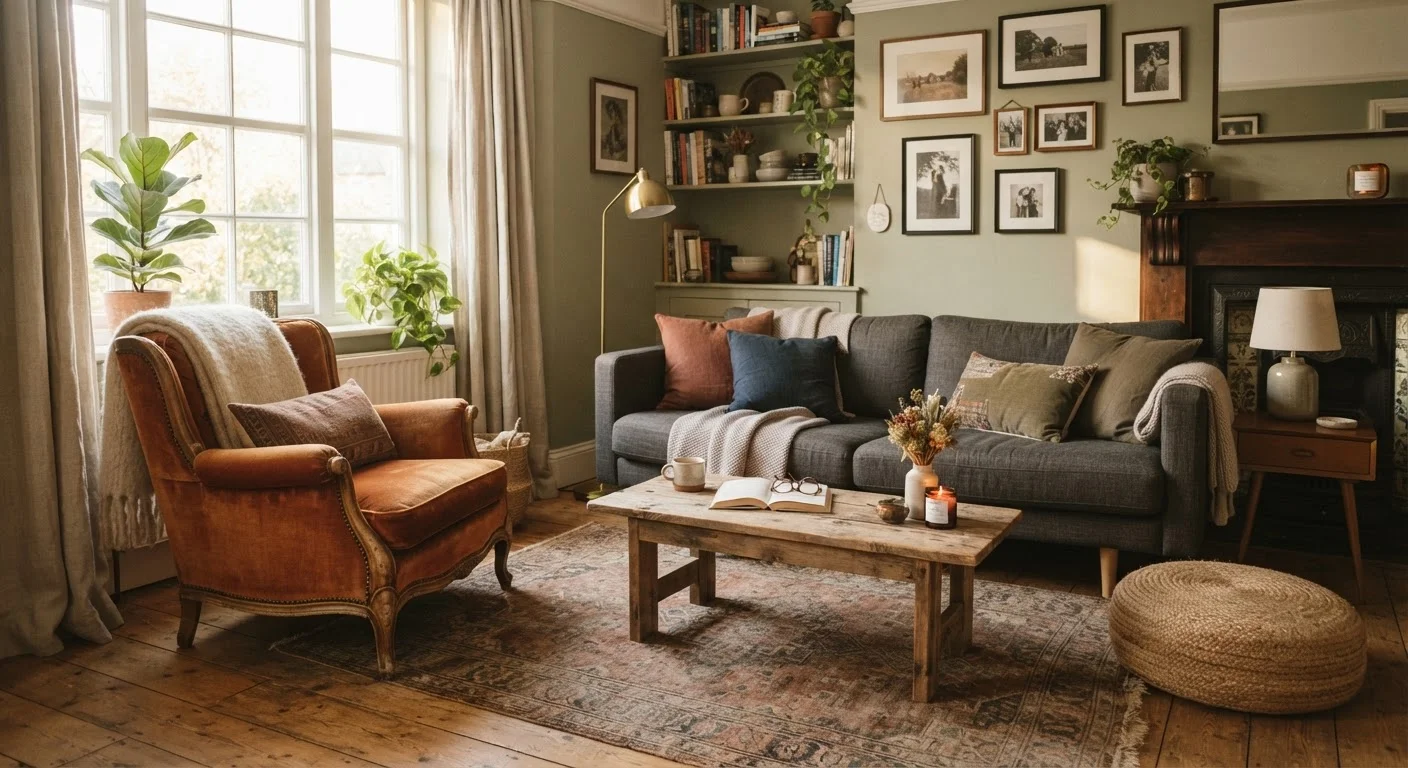
The Problem With the Perfect Set
Walk into almost any furniture showroom and you'll see the same thing: a sofa, loveseat, coffee table, end tables, and TV console, all in matching wood tones and complementary upholstery, staged to look like a complete room. It's persuasive. It's also one of the most common reasons family living rooms end up feeling flat, impersonal, and oddly formal - regardless of how much was spent.
Matching suites solve the coordination problem by removing all variation. But variation, used with intention, is exactly what makes a room feel like people actually live in it. When every surface shares the same finish and every cushion nods to the same fabric, a room loses the visual interest that makes it welcoming rather than merely ordered.
The alternative isn't chaos - it's coordination. Understanding the difference between the two is the starting point for furnishing rooms that genuinely work for busy families.
Buying an entire room suite at once to achieve an 'instant' finished look.
Why it happens: Showroom displays are designed to sell complete sets, making the all-in-one purchase feel like the logical shortcut. The room looks polished in the store, so families assume it will translate directly home.
Treating identical finishes as the only route to visual cohesion.
Why it happens: Many people conflate 'matching' with 'coordinating.' Matching means identical; coordinating means harmonious - and the difference is significant in practice.
Ignoring scale relationships between pieces from different sources.
Why it happens: When shopping individually rather than as a set, it's easy to fall in love with pieces in isolation without considering how they'll relate to each other spatially.
Filling a room too quickly, leaving no space for pieces with meaning to accumulate.
Why it happens: The pressure to have a 'complete' room can push families to furnish everything at once, even when the budget or the right pieces aren't there yet.
Placing all furniture against walls, a habit reinforced by showroom layouts.
Why it happens: Pushing pieces to the perimeter feels like it creates more space, but it usually produces a room that feels hollow in the center and disconnected for conversation or shared activities.
How to Mix Pieces Without Losing Cohesion
The goal when mixing furniture from different sources is to create visual unity through shared logic, not shared origin. Three tools do most of the work: a consistent color palette, a controlled range of materials, and attention to scale.
Color palette first. Choose two anchor tones and one accent, then repeat them across upholstery, wood finishes, and accessories. A navy sofa, a natural oak side table, and a terracotta throw can all live together because the palette gives them a common language.
Limit material variety. Rooms that use more than three or four distinct materials - say, chrome, lacquer, wicker, velvet, and reclaimed timber all at once - can start to feel visually noisy. A tighter material edit makes mixed pieces feel like a considered collection.
Don't Let Trends Drive Structural Decisions
A furniture finish or upholstery color that feels fresh today may read as dated within a few years - especially for large, expensive pieces. For major investments like sofas or dining tables, lean toward classic proportions and neutral tones that can be updated with accessories. Reserve trend-led choices for lower-cost, easier-to-replace items like cushions, throws, or accent chairs.
Mind the scale. Mismatched scale is often what makes a mixed room feel accidental rather than curated. A petite accent chair beside a deep, low-profile sectional looks awkward, not eclectic. Match proportions as carefully as you would tones.
Families sharing rooms also benefit from pieces that serve multiple functions - a storage ottoman that acts as a coffee table, or nesting side tables that adjust for different needs. This kind of flexibility, rarely available in matching sets, is one of the strongest arguments for building a room piece by piece. If you're navigating a shared space with different users in mind, the same principles apply - see strategies for decorating shared rooms.
The content provided on our blog site traverses numerous categories, offering readers valuable and practical information. Readers can use the editorial team’s research and data to gain more insights into their topics of interest. However, they are requested not to treat the articles as conclusive. The website team cannot be held responsible for differences in data or inaccuracies found across other platforms. Please also note that the site might also miss out on various schemes and offers available that the readers may find more beneficial than the ones we cover.