

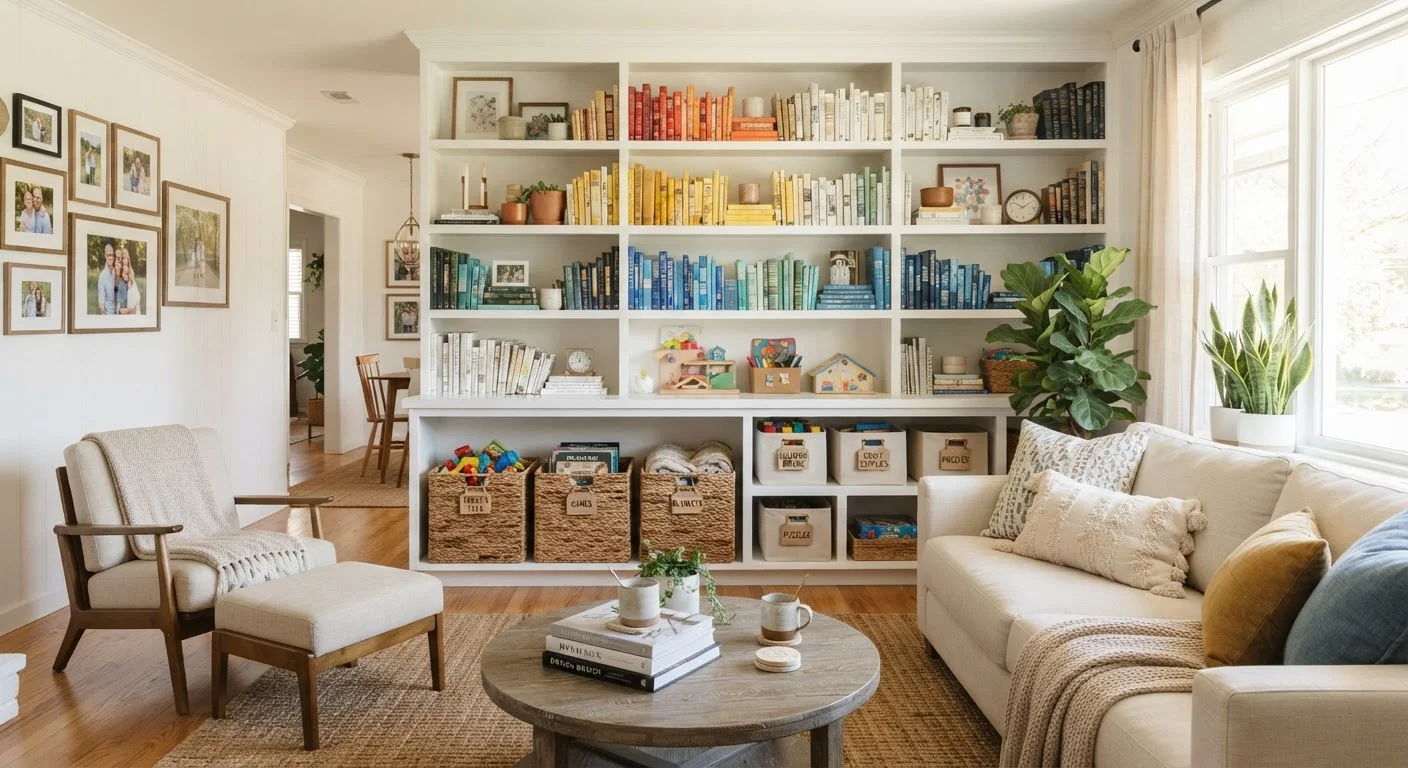
Why Organisation Systems Matter for Family Homes
Most households don't struggle with a shortage of storage - they struggle with a lack of system. When items don't have a consistent home, clutter accumulates faster than it can be cleared. The right organisation approach gives every household member a shared mental model for where things belong, which reduces friction and saves time over the long run.
This guide covers the most widely recognised interior organisation frameworks. Each entry explains how the method works, what it demands from users, and which household types tend to find it most useful. Use it as a reference to identify approaches worth exploring further, not as a rigid prescription - the best system is one your family will actually maintain.
If you're not sure where to start, a room-by-room decluttering audit can help you identify where storage gaps and layout friction exist before you invest in any particular system.
Zone-based organisation
A method that divides living spaces into dedicated activity areas, with all related items stored within that zone. Reduces search time and makes tidying more intuitive for all household members.
Containerisation
Assigning a fixed container to each category of items, so the container itself acts as the storage limit. When it's full, something must leave before more is added.
Visible storage
Storing frequently used items in open, accessible locations such as hooks, trays, or open shelving. Prioritises convenience and reduces friction during daily routines.
Vertical storage
Using wall height and ceiling clearance for storage rather than floor space. Common solutions include tall shelving units, pegboards, and wall-mounted rails.
One-in, one-out rule
A simple maintenance principle: every new item that enters the home is offset by one existing item leaving. Helps prevent gradual accumulation without requiring a full reorganisation.
Category-first method
An organisation approach that addresses all items of one category across the whole home before moving to the next, rather than working room by room. Encourages deliberate decisions about what to keep.
Common Organisation Methods: A Quick Reference
The approaches below represent the most commonly used frameworks in home organisation. They are not mutually exclusive - many households combine elements from several.
| Most beginner-friendly approach | Zone-based organisation |
| Best for reducing overall volume | Category-first method |
| Easiest maintenance rule for families | One-in, one-out |
| Most effective in small homes | Vertical storage systems |
| Useful for pantries and toy areas | Containerisation with labeled bins |
| Suits daily-use items | Visible (open) storage |
Zone-Based Organisation
Divides the home into distinct activity zones (cooking, homework, crafts, charging), with all related items stored within that zone. Works well for families with children because it makes tidy-up intuitive - items go back to the zone where they're used.
Category-First Organisation (inspired by the KonMari method)
Rather than organising room by room, this approach addresses all items of one category at once - all clothing, then all books, then all miscellaneous items. It forces a genuine decision about each possession, which makes it effective for reducing overall volume before investing in storage solutions.
The One-In, One-Out Rule
A maintenance rule rather than a full system: for every new item that enters the home, one existing item leaves. Simple to explain to children and helps prevent gradual accumulation, particularly in bedrooms and toy storage areas.
Containerisation
Every category of item gets a dedicated container of a fixed size. When the container is full, it signals that something must leave before more arrives. Common in pantries, toy bins, and linen closets. Works best when containers are clearly labeled.
Visible vs. Hidden Storage
A design-led decision: items used daily are stored visibly and within easy reach (open shelving, hooks, trays), while rarely used items go into concealed storage (drawers, closed cabinets, under-bed boxes). Balancing the two prevents both visual clutter and inconvenient retrieval.
Vertical Storage Systems
Maximises wall and ceiling height rather than floor space - important in smaller homes. Includes floor-to-ceiling shelving, wall-mounted pegboards, and stackable units. Particularly useful in kitchens, garages, and children's rooms where floor space is limited.
No System Works Without Decluttering First
Adding storage containers or shelving to an already overcrowded space rarely solves the underlying problem. Most organisation experts recommend reducing the volume of possessions before selecting a storage method - otherwise you're simply reorganising clutter. Start by removing items that are broken, unused, or duplicated, then build a system around what remains.
For households that also need a functional work area within shared spaces, the same zone-based logic applies - see our guide to setting up a home working space without a spare room.
The content provided on our blog site traverses numerous categories, offering readers valuable and practical information. Readers can use the editorial team’s research and data to gain more insights into their topics of interest. However, they are requested not to treat the articles as conclusive. The website team cannot be held responsible for differences in data or inaccuracies found across other platforms. Please also note that the site might also miss out on various schemes and offers available that the readers may find more beneficial than the ones we cover.