

Florida Has More Than You Think
If your family's Florida mental map starts and ends with major Orlando attractions, you're leaving an enormous amount of adventure on the table. Florida is one of the most ecologically and culturally diverse states in the country - home to ancient springs, mangrove coastlines, historic small towns, and wildlife that genuinely stops kids in their tracks.
The destinations below are all drivable from Florida's main highway corridors, family-friendly in terms of amenities and pacing, and far less crowded than the big-ticket parks. Whether your crew skews toward nature lovers, beach chasers, or history buffs, something on this list will click. For families thinking about how to stretch every dollar, our guide to free and low-cost activities pairs well with any of these stops.
Florida Caverns State Park, Marianna
Located in the Florida Panhandle near Marianna, Florida Caverns is one of the only publicly accessible dry cave systems in the entire state - and it genuinely surprises families who had no idea Florida had caves at all. Guided tours wind through formations of stalactites, stalagmites, flowstones, and columns that took millions of years to form.
The park also offers swimming in the Blue Hole spring, hiking trails, and equestrian paths for families who want to make a full day of it. Entry fees are modest, and the cave tour adds a small additional cost that most families find well worth it. Kids who love science or who tend to get bored by beach days often find this one of their Florida highlights.
Florida Caverns surprises families who never imagined the state had underground adventures to offer.
Ichetucknee Springs State Park, Fort White
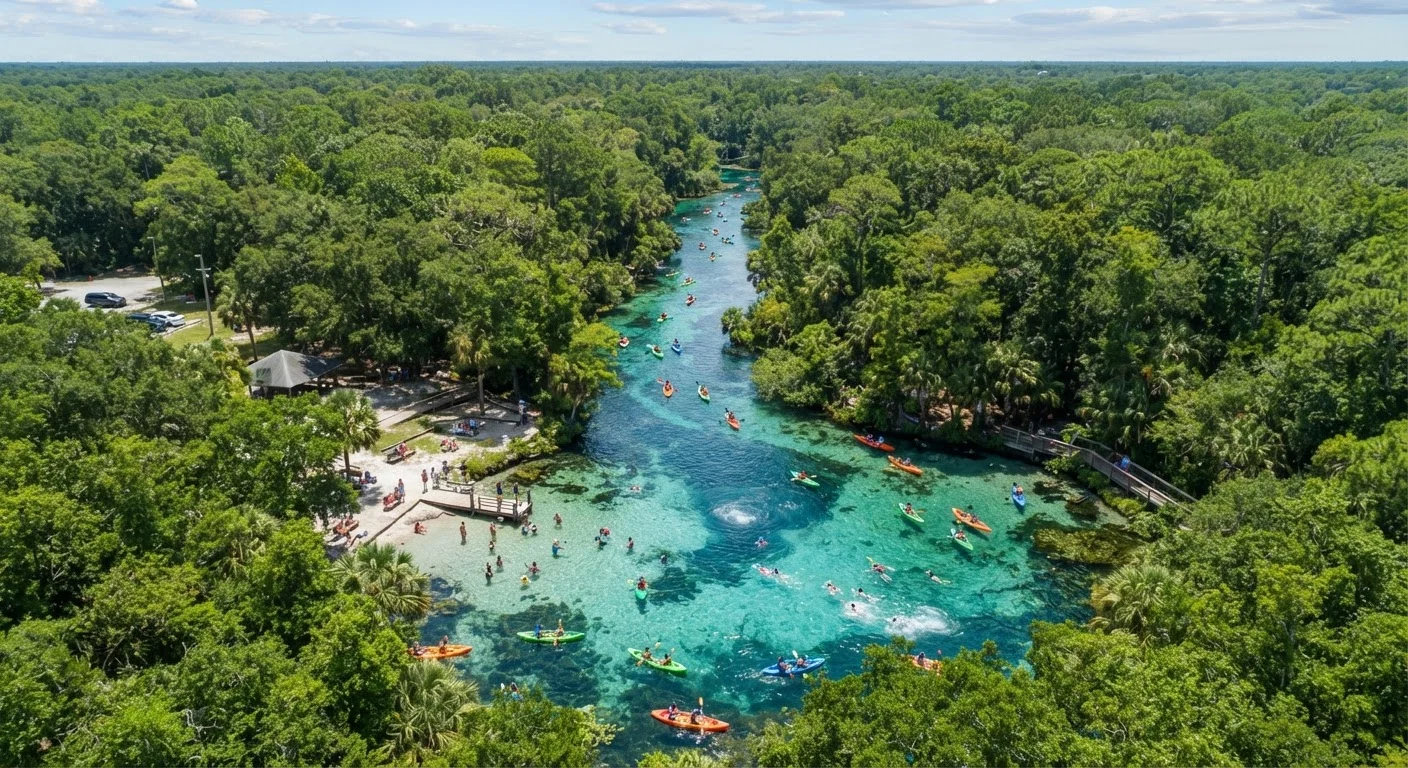
Tubing down the Ichetucknee River is one of those Florida experiences that feels almost impossibly perfect: crystal-clear, 68°F water, gentle current, abundant wildlife, and zero cell service. The park strictly limits daily visitor numbers to protect the ecosystem, so it rarely feels overcrowded.
The full river float runs about three hours, making it manageable for older kids and adults. A shorter upper section suits younger children or families with less time. Snorkeling is excellent along much of the route. Parking and tube rentals are handled at designated outfitters outside the park - checking the park's official site before you go will give you the most current logistics and availability details.
A three-hour float down crystal-clear spring water is one of Florida's most memorable family experiences.
Cedar Key
Cedar Key is a small island community on Florida's Gulf Coast that feels genuinely removed from the tourist circuit. It's known for its working waterfront, locally harvested clams, and a pace of life that slows everyone down within about 20 minutes of arriving. The town itself is walkable, with independent restaurants and shops lining the main streets.
Kayaking through the surrounding estuaries is excellent, and the Cedar Keys National Wildlife Refuge - accessible by boat - offers close encounters with birds, dolphins, and manatees depending on the season. It's a particularly good fit for families who appreciate the kind of place that feels lived-in rather than staged. It's also explored in our article on why smaller destinations can outshine famous ones.
Cedar Key's unhurried waterfront pace gives families the reset they didn't know they needed.
Corkscrew Swamp Sanctuary, Naples Area
Managed by the National Audubon Society, Corkscrew Swamp Sanctuary protects the largest old-growth bald cypress forest remaining in North America. A boardwalk trail winds 2.5 miles through the swamp, putting families at eye level with wood storks, alligators, otters, and towering trees that can exceed 500 years in age.
The experience is calm and immersive rather than action-packed, which makes it better suited to kids who can handle a slower, observational pace. Binoculars help enormously. The sanctuary has a visitor center, restrooms, and on-site naturalists available during peak hours. Admission fees apply; check the sanctuary's official site for current pricing and seasonal hours.
Walking through ancient cypress trees puts the natural world into a perspective no screen ever could.
St. Augustine
St. Augustine holds the distinction of being the oldest continuously occupied European-established settlement in the contiguous United States, founded in 1565. That history is visible everywhere: cobblestone streets, a 17th-century Spanish fortress (Castillo de San Marcos, a National Monument), and a compact historic district that's genuinely engaging for school-aged kids.
The city is very walkable, beaches are a short drive away, and the range of dining makes it easy to keep everyone fed without breaking the budget. Ghost tours in the evening are a reliable hit with older kids. St. Augustine rewards the kind of budget-conscious family travel where the destination itself does most of the entertaining.
St. Augustine's layered history gives kids a living history lesson they'll actually remember.
Myakka River State Park, Sarasota Area
At roughly 58 square miles, Myakka River State Park is one of Florida's oldest and largest state parks. The park's main draw is its exceptional wildlife density: alligators sunning on the riverbanks, roseate spoonbills wading in shallow water, bald eagles circling overhead, and white-tailed deer appearing at dusk. It's the kind of place that makes wildlife documentaries feel accessible.
Boat tours on the Upper Myakka Lake run on a regular schedule and are a reliable way to see alligators up close in a safe, guided setting. The park also has cabins and campgrounds for families who want to extend the stay. Day-use fees are low, making this one of the more affordable full-day experiences on this list. Check Florida State Parks' official site for current fees and tour schedules.
Myakka's wildlife density rivals safari experiences - and it's a fraction of the cost.
Planning Your Florida Road Trip
Most of these destinations work best between October and April, when humidity and storm risk drop considerably. Summer visits are absolutely doable - especially for springs, which maintain a consistent water temperature year-round - but build in mid-day rest time for younger kids.
Timing Makes a Real Difference
Florida's springs are a year-round option since water temperatures stay around 68°F regardless of season - actually refreshing in summer and warm in winter. For state parks and wildlife sanctuaries, the cooler months (October through March) bring lower humidity, fewer insects, and more active wildlife. Arriving early in the morning, particularly for bird watching, dramatically increases what your family will see.
If Florida is part of a broader family travel strategy rather than a standalone trip, it's worth exploring how mid-sized cities and nature-forward states stack up as alternatives. Our piece on why small cities often outperform their reputation is a good companion read, and our end-to-end budget travel guide covers everything from destination selection to keeping kids happy on the road.
Whatever corners of Florida you explore, the common thread is this: the state rewards families who venture a little off the beaten path. The theme parks will always be there - but these experiences tend to be the ones kids still talk about years later.
The content provided on our blog site traverses numerous categories, offering readers valuable and practical information. Readers can use the editorial team’s research and data to gain more insights into their topics of interest. However, they are requested not to treat the articles as conclusive. The website team cannot be held responsible for differences in data or inaccuracies found across other platforms. Please also note that the site might also miss out on various schemes and offers available that the readers may find more beneficial than the ones we cover.