

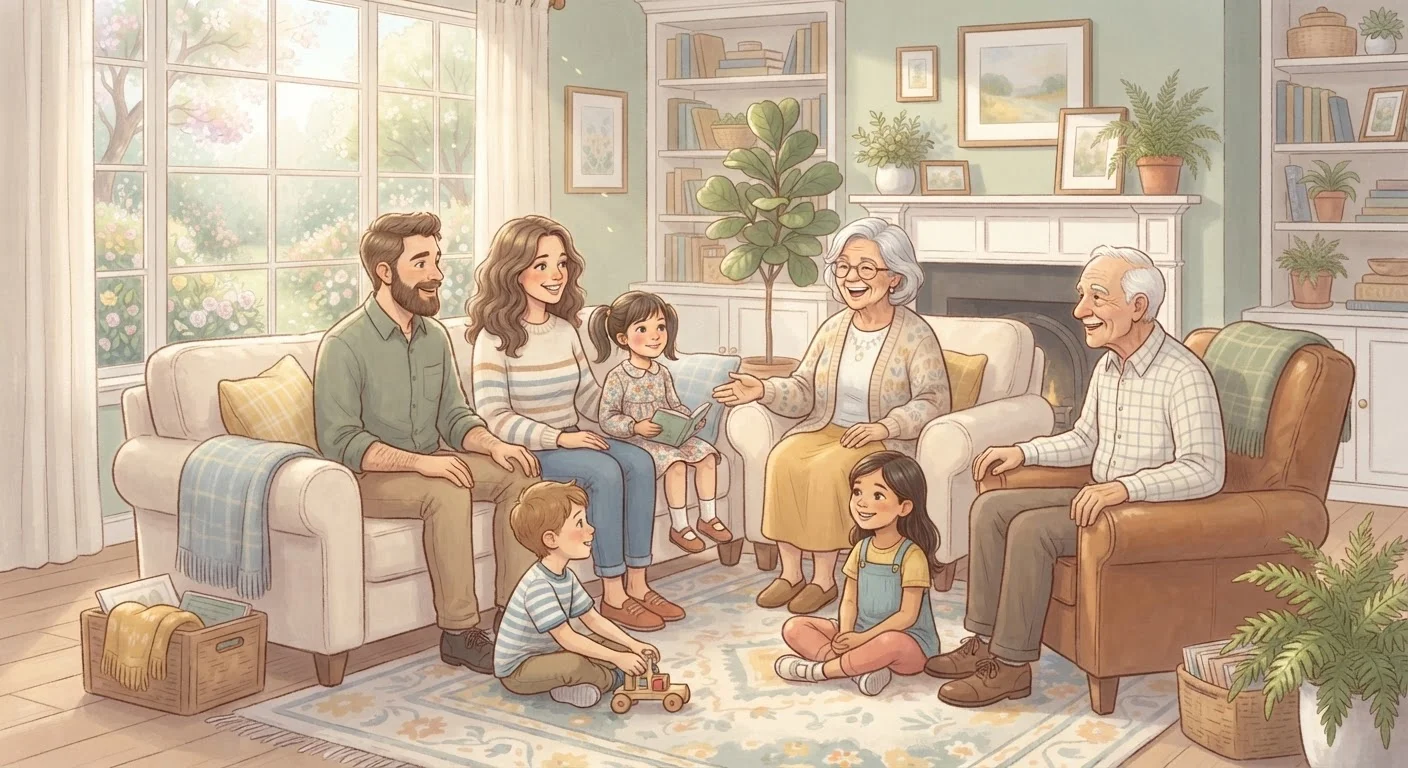
Mental Health Is an Everyday Reality, Not Just a Crisis
When most people hear 'mental health,' they picture a breaking point - a panic attack, a diagnosis, a call to a crisis line. Those moments are real and important. But they represent one end of a very wide spectrum. Mental health is something every person experiences every single day, in the quiet moments between the dramatic ones.
Think of it this way: physical health isn't only relevant when someone breaks a bone. It shows up in how well you sleep, how much energy you have, and how your body responds to a common cold. Mental health works the same way - it shapes how a toddler handles a lost toy, how a teenager navigates a difficult friendship, and how a parent copes with competing demands at home and work.
Reframing mental health as an everyday reality - rather than a label reserved for crisis - is one of the most useful shifts a family can make. It makes the topic approachable, and it opens the door to small, consistent habits that build genuine resilience over time.
What Emotional Wellbeing Looks Like at Each Age
Mental health needs shift significantly across the lifespan, and what looks like 'thriving' at five looks very different from thriving at forty-five. Understanding age-specific signals helps families notice when someone is doing well - and when they might need extra support.
1 in 5
U.S. adults experience a mental health condition annually
According to the National Institute of Mental Health (NIMH), approximately one in five U.S. adults lives with a mental illness in any given year.
50%
Of lifetime mental health conditions begin by age 14
The World Health Organization and NIMH both note that half of all lifetime mental health conditions have their onset by age 14, underscoring the importance of early family awareness.
- Young children (ages 2-7) are learning to name and manage emotions for the first time. Healthy emotional development at this stage looks like curiosity, the ability to recover from disappointment, and secure attachment to caregivers. Tantrums are developmentally normal; persistent withdrawal or regression can sometimes signal stress worth noting.
- School-age children (ages 8-12) are building their sense of competence and belonging. Signs of good mental health include friendships, engagement with learning, and the ability to express worry or frustration without shutting down.
- Teenagers are navigating identity, peer pressure, and a significant neurological transition. Some emotional volatility is expected, but ongoing sadness, hopelessness, or social isolation warrants closer attention and, often, professional guidance.
- Adults and caregivers frequently deprioritize their own emotional needs. Sustained stress, poor sleep, and constant irritability aren't just 'adulting' - they're signals that deserve the same attention you'd give a persistent headache.
For a deeper look at how emotional needs evolve, see our guide to mental wellbeing across the family lifespan.
The Connection Between Mental and Physical Health
Mental and physical health are not two separate systems - they are deeply intertwined. Persistent anxiety can contribute to headaches and digestive issues. Depression can reduce motivation to exercise or prepare nourishing meals. Sleep disruption affects both mood regulation and immune function. The relationship runs in both directions.
The Mind-Body Connection Is Well Established
Research consistently shows that conditions like chronic stress, anxiety, and depression have measurable physical effects - from elevated cortisol levels to changes in cardiovascular health. Conversely, physical illness frequently affects mood and cognitive function. Health professionals increasingly view these systems as integrated rather than separate. This is not a fringe idea - it reflects mainstream medical understanding.
This means that supporting your family's mental health isn't separate from supporting their physical health - it's part of the same effort. Encouraging rest, movement, social connection, and time outdoors are all practices that serve both. For more on how these systems interact, see our article on where mental and physical health overlap.
This article is for general informational purposes only and is not a substitute for professional medical or mental health advice. Always consult a qualified healthcare provider with questions about your family's wellbeing.
Building a Home Where Mental Health Is Talked About
Families don't need to become therapists to support each other's mental health. What matters most is creating an environment where feelings are acknowledged rather than dismissed, and where asking for help is seen as a strength.
Simple habits carry real weight: checking in at dinner with a genuine 'how did today actually feel?' rather than 'how was your day?'; modeling self-compassion by naming your own hard moments out loud; and responding to a child's distress with curiosity before correction. These small actions accumulate into a culture of emotional safety.
If you want a practical framework for this, our household check-in guide offers a structured way to notice how everyone in your home is really doing - before small struggles become bigger ones. And if you're weighing how open to be with children about more complex mental health topics, a balanced look at open family conversations can help you think it through.
Mental health, at its core, is about belonging, regulation, and connection - all things families are already practicing every day. Understanding what it actually means is the first step to doing it more intentionally.
Frequently Asked Questions
No. Mental health refers to your overall emotional and psychological wellbeing, while mental illness describes diagnosable conditions that significantly disrupt daily functioning. Everyone has mental health - just as everyone has physical health - regardless of whether they have a diagnosis.
Children can begin to understand basic emotional concepts - like naming feelings and recognizing when they feel overwhelmed - from toddlerhood. Age-appropriate conversations evolve over time, and starting early helps normalize the topic before stress or crisis arises.
Look for changes that persist over time: withdrawal from activities they usually enjoy, significant shifts in sleep or appetite, difficulty managing daily tasks, or expressions of hopelessness. When in doubt, a conversation with your family's primary care provider is a good starting point.
Ongoing, unmanaged stress can gradually affect mood, sleep, relationships, and even physical health. Building regular habits that support emotional recovery - rest, connection, and moments of calm - can make a meaningful difference. Consulting a mental health professional is appropriate if stress feels unmanageable.
Begin with low-stakes, everyday moments - naming your own feelings out loud, asking open questions during car rides, or acknowledging when something felt hard. For a structured starting point, see our <a href="/family-health/mental-wellbeing/a-household-check-in-for-emotional-wellbeing">household emotional wellbeing check-in</a>.
The content provided on our blog site traverses numerous categories, offering readers valuable and practical information. Readers can use the editorial team’s research and data to gain more insights into their topics of interest. However, they are requested not to treat the articles as conclusive. The website team cannot be held responsible for differences in data or inaccuracies found across other platforms. Please also note that the site might also miss out on various schemes and offers available that the readers may find more beneficial than the ones we cover.