

Why This Conversation Can Feel So Fraught
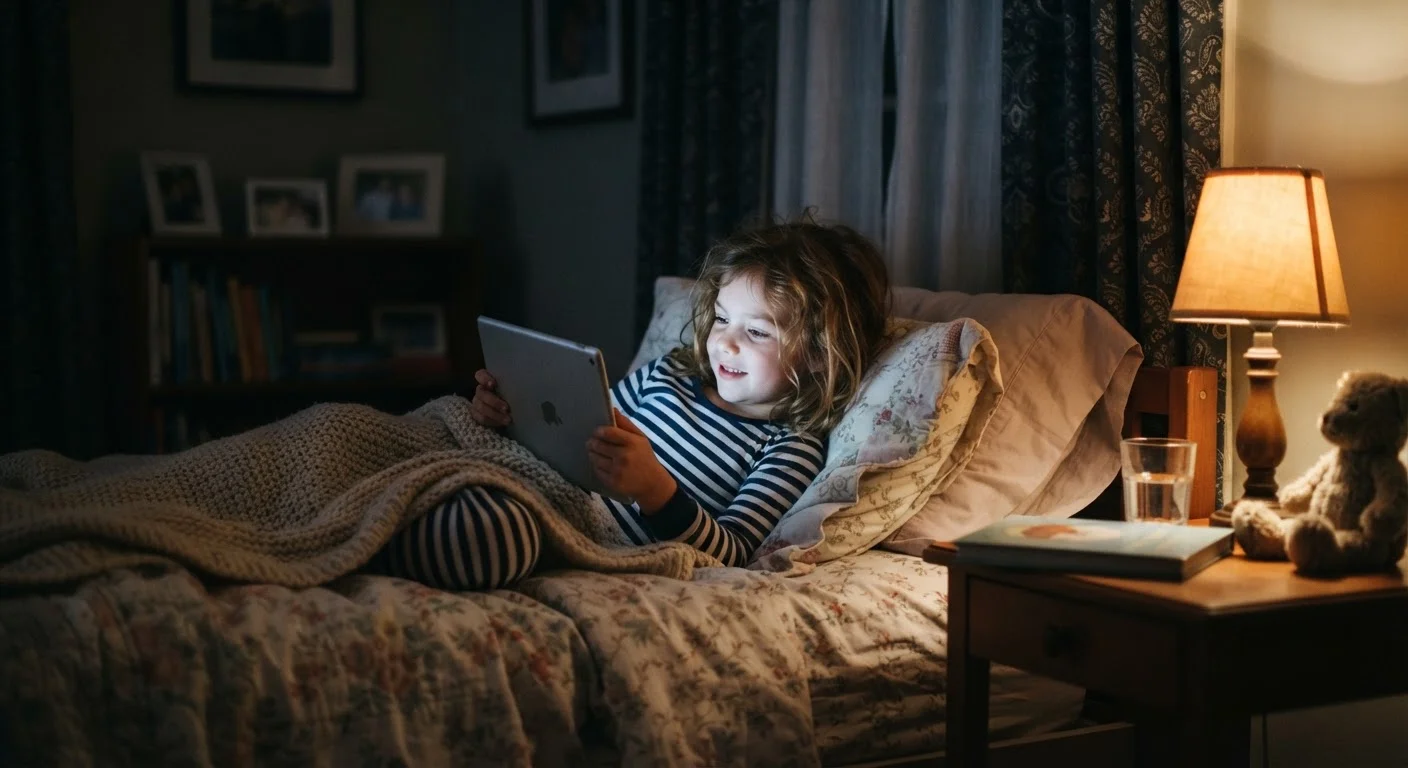
Few parenting topics generate as much anxiety as screen time - and when you add children's sleep into the mix, the worry can escalate quickly. Headlines regularly announce that tablets and smartphones are "wrecking" kids' sleep, while many families quietly notice that a calm show before bed seems to help their child wind down without incident.
The truth, as is often the case in developmental health research, sits somewhere more nuanced than either extreme. Understanding what the evidence actually shows - and where genuine uncertainty remains - can help families make decisions that fit their own children rather than reacting to generalized alarm.
For context on how sleep debt affects kids over time, see our article on the hidden toll of chronic sleep debt on school-age children.
Common Myths - and What the Research Actually Says
Below are some of the most widespread beliefs about screens and children's sleep, each examined against current evidence.
Myth
Blue light from screens is the main reason kids can't sleep after using devices.
Fact
Blue light is a real but relatively modest factor; stimulating content and delayed bedtimes are at least as influential.
Blue light wavelengths do suppress melatonin production - the hormone that signals the body it's time to sleep. However, research suggests the magnitude of this effect in real-world settings is smaller than popular coverage implies. A 2019 review in Sleep Medicine Reviews noted that psychological stimulation from content, the displacement of sleep time, and the interactive nature of devices likely contribute more to sleep disruption than light exposure alone. Passive, calm viewing has a different impact profile than an exciting video game or social media scroll.
Myth
Any screen use before bed will automatically delay a child's sleep.
Fact
The type of content and level of engagement matters significantly - not all pre-bed screen use affects sleep equally.
Studies examining this question consistently find that emotionally arousing, fast-paced, or interactive content is more likely to delay sleep onset than slow-paced or familiar programming. A child watching a calm, familiar show is in a meaningfully different physiological state than one competing in an online game or receiving notifications. That said, individual children vary considerably in their sensitivity, so what works for one family may not generalize to another.
Myth
If a child falls asleep easily after watching something, screens clearly aren't a problem for them.
Fact
Sleep onset speed is only one measure of sleep quality; screens may still affect sleep depth or duration even if falling asleep seems easy.
Some children appear to fall asleep without difficulty after screen use but may experience more fragmented sleep or reduced slow-wave sleep - the deeply restorative stage important for memory consolidation and physical repair. Because children often can't report on sleep quality themselves, and parents aren't typically observing sleep architecture, this effect can go unnoticed. It's one reason pediatric guidance focuses on the full bedtime routine rather than just whether a child falls asleep quickly. For more on what happens during sleep, see children's sleep cycles explained.
Myth
Screen-time limits are the most important thing parents can do for children's sleep.
Fact
A consistent sleep schedule and calming pre-bed routine have stronger evidence than screen limits alone.
Decades of sleep research point to behavioral and environmental factors - consistent sleep and wake times, a predictable wind-down routine, a cool and dark bedroom - as the most reliable supports for children's sleep quality. Screen limits, where they help, are best understood as one element of a broader routine rather than the central lever. The evidence on mindfulness for families also suggests that general stress management before bed may benefit sleep for both children and parents.
Myth
Teenagers are just choosing to stay up late - screens are an excuse.
Fact
Adolescent sleep timing is driven partly by biology, and screens interact with a pre-existing physiological shift.
Puberty triggers a genuine biological shift in circadian rhythm - a natural delay in when adolescents feel sleepy and when they wake. This means many teens are physiologically inclined toward later sleep times independent of any device use. Evening screen use, however, can compound this shift by further suppressing melatonin and providing stimulation at a time when the body is already working against early sleep. Recognizing the biological component helps parents approach the conversation with more empathy and less blame.
What Practical Guidance Looks Like
The American Academy of Pediatrics (AAP) recommends avoiding screens for at least an hour before bed for school-age children and teenagers, and keeping devices out of bedrooms overnight. These recommendations are based on a reasonable reading of available evidence - not a declaration that any screen use inevitably causes harm.
~60%
Children with a device in their bedroom at night
Common Sense Media surveys have consistently found that a majority of school-age children have access to a screen in their sleeping space, which is associated with shorter sleep duration.
30-60 min
Recommended screen-free period before bedtime
The American Academy of Pediatrics recommends at least a 30-to-60-minute screen-free wind-down period as part of a healthy sleep routine for school-age children and teens.
In practice, a few principles tend to matter more than a rigid rule. Consistent sleep and wake times, a predictable pre-bed routine (including a wind-down period that doesn't involve fast-paced or emotionally activating content), and keeping devices out of the bedroom overnight are all supported by stronger evidence than any single "screen time limit" figure.
If your child is genuinely struggling with sleep - difficulty falling asleep, frequent night waking, or daytime fatigue - it's worth speaking with their pediatrician. There are many potential contributors to pediatric sleep difficulties, and screens are just one piece of a larger picture. Our overview of children's sleep cycles can also help you understand what healthy sleep looks like at each developmental stage.
When to Seek Professional Guidance
If your child consistently has difficulty falling asleep, stays awake for long periods at night, snores loudly, or seems unrefreshed most mornings, these may signal a sleep issue that goes beyond screen habits. A pediatrician can help identify whether behavioral, environmental, or medical factors are involved. Don't wait for a "serious enough" threshold - early conversations with your child's doctor are always appropriate.
And if evening stress or emotional dysregulation is part of the bedtime picture for your family, the after-school restraint collapse phenomenon may be relevant - it explains why many children hold it together all day and unravel at night, regardless of screen use.
This article is for general informational purposes only and does not constitute medical advice. If you have concerns about your child's sleep, consult a qualified healthcare professional.
The content provided on our blog site traverses numerous categories, offering readers valuable and practical information. Readers can use the editorial team’s research and data to gain more insights into their topics of interest. However, they are requested not to treat the articles as conclusive. The website team cannot be held responsible for differences in data or inaccuracies found across other platforms. Please also note that the site might also miss out on various schemes and offers available that the readers may find more beneficial than the ones we cover.