

Start here
Setting Up for Success Before Training Begins
Understand first
The Decompression Period: What to Expect in Week One
Build the habit
Building Your Daily Routine
Start training
First Training Priorities: Five Skills That Matter Most
Get everyone on board
Involving the Whole Family
Know your limits
When to Ask for Help
Setting Up for Success Before Training Begins
Before your dog crosses the threshold, the most important training decisions have already been made - by you. Agreeing on house rules, gathering the right supplies, and dog-proofing your space are what make those first chaotic days manageable. If you haven't already worked through the basics, our training readiness checklist can help you confirm you're genuinely prepared.
At minimum, decide before day one: Where will the dog sleep? Which rooms are off-limits? Who is responsible for each part of the daily routine? Ambiguity here quickly turns into inconsistency, and inconsistency is confusing for dogs.
The Decompression Period: What to Expect in Week One
Bringing home a new dog - whether a puppy or an adult rescue - is exciting. It's also overwhelming for the dog. Behaviorists often refer to the first one to three weeks as the decompression period: a time when your dog is quietly processing a completely new environment, new smells, new people, and new rules.
During this window, resist the urge to introduce your dog to every neighbor, plan playdates, or start structured obedience sessions immediately. Instead, focus on calm, positive interactions. Let your dog explore at their own pace. Keep the household quieter than usual if you can. A dog that feels safe will learn much faster than one that feels overwhelmed.
The 3-3-3 Rule of Thumb
Many rescue advocates reference an informal guideline: roughly three days for a dog to feel less overwhelmed, three weeks to learn household routines, and three months to truly feel at home. This isn't a precise scientific formula, but it's a useful reminder that settling in takes real time. Don't measure your dog's personality - or your training progress - against just the first few days.
Building Your Daily Routine
Dogs are creatures of habit. A predictable schedule - consistent feeding times, regular outdoor bathroom breaks, set exercise periods, and a reliable bedtime - dramatically reduces anxiety and accelerates housetraining. Think of the routine as your dog's map of the day; when they know what to expect, they can relax between events rather than staying alert for surprises.
A simple structure to aim for includes: morning outdoor break and feeding, midday activity or training session, afternoon outdoor break, evening walk or play, and a final outdoor break before bed. Adjust timing to your family's real schedule - the most important thing is that it repeats consistently, even on weekends.
Just as new homeowners learn that consistent maintenance schedules protect their investment, pet owners quickly discover that a steady daily routine protects the relationship you're building with your dog.
First Training Priorities: Five Skills That Matter Most
You don't need to teach your dog twenty commands in month one. You need five that genuinely improve daily life and lay the groundwork for everything else.
- Sit: The universal starting point. Useful before meals, at doorways, and whenever you need your dog to pause.
- Stay: Builds impulse control - critical for safety. Start with very short durations (two to three seconds) and build gradually.
- Come (recall): The most important safety skill your dog will ever learn. Practice it in low-distraction settings first, and always make coming to you rewarding.
- Leave it: Teaches your dog to disengage from something tempting - food on the floor, a child's toy, a squirrel.
- Leash manners: Walking without pulling makes exercise pleasant rather than a daily battle. Consistent short practice goes a long way.
Use short, upbeat training sessions - five to ten minutes, two to three times per day - with small, high-value treats as rewards. Positive reinforcement (rewarding the behavior you want) is both kind and effective; avoid punishment-based methods, which can increase fear and anxiety.
Make 'Come' the Best Thing Ever
Never call your dog to you for something they find unpleasant - like nail trimming or a bath - during the early weeks. If 'come' predicts something uncomfortable, your dog will start avoiding it. Instead, build a strong positive association first, then gradually introduce less exciting outcomes once the recall is reliable.
Involving the Whole Family
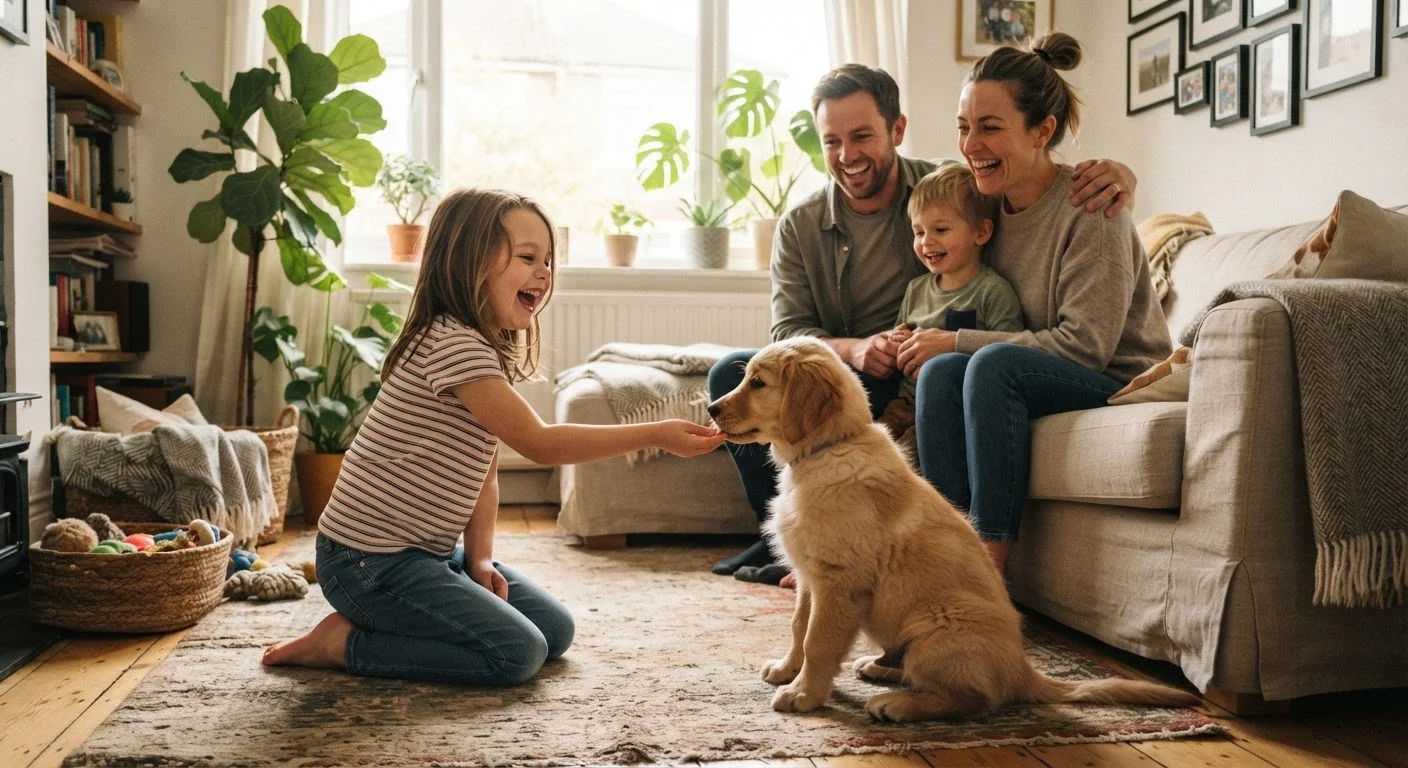
One of the most common reasons early training stalls is that family members are unknowingly giving the dog mixed signals. If one person allows jumping for a greeting while another scolds it, the dog cannot figure out the rule. A short family meeting to align on the five core rules - and the exact words used for each cue - pays enormous dividends.
Kids can absolutely participate in training, and it's great for their confidence. Pair them with an adult for supervised sessions and keep expectations age-appropriate. A six-year-old practicing the sit-and-treat routine is wonderful; asking a child to manage leash walking independently is too much too soon. For a broader picture of what dog ownership looks like for families over time, our family dog ownership guide offers helpful context.
When to Ask for Help
Reaching out to a professional isn't admitting defeat - it's one of the smartest investments you can make in the first month. A certified professional dog trainer can spot patterns you might not notice and give you customized guidance that generic advice cannot. Consider getting professional support if your dog shows persistent fearfulness, guarding behavior over food or toys, significant difficulty with housetraining after two to three weeks of consistent effort, or any aggression.
Your veterinarian is also a key partner. Some behavioral challenges have underlying health components - pain, thyroid issues, and other medical conditions can influence how a dog behaves. Our new pet health checklist outlines the first-month veterinary steps every new dog owner should take, and the Pet Health Basics hub is a useful ongoing resource as questions come up.
If your household grows to include more than one pet, training multiple pets simultaneously brings its own layer of complexity - that guide can help when you're ready.
This article provides general educational information about pet training and is not a substitute for guidance from a qualified veterinarian or certified animal behavior professional. If your dog displays worrying behavior, please consult a professional directly.
Frequently Asked Questions
Most dogs benefit from at least a few days to a week of quiet decompression before structured training begins. Once your dog seems relaxed and comfortable at home, short training sessions of five to ten minutes can start. Puppies can begin even earlier with very simple cues like their name and sit.
Housetraining timelines vary widely depending on the dog's age, breed, and history. Puppies typically take several weeks to a few months with consistent supervision and a regular outdoor schedule. Adult dogs often learn faster but may need extra patience if they had little prior structure.
Where your dog sleeps is a personal family decision, and there is no single right answer. Starting with a crate or a designated dog bed in a consistent spot helps your dog learn boundaries quickly. Whichever you choose, being consistent from the first night prevents confusion.
Some anxiety in the first week is completely normal as your dog adjusts. Give them a quiet, safe space to retreat to and avoid overwhelming them with visitors or activity. If fearful behavior persists beyond two to three weeks or seems severe, consult a veterinarian or certified animal behaviorist.
Absolutely not - adult dogs are very capable of learning new behaviors and often focus better than puppies. The foundations are the same: patience, consistency, and positive reinforcement. Many rescue dogs already know basic cues and simply need time to learn your household's specific expectations.
Two to three short sessions of five to ten minutes each per day is a realistic and effective goal for most families. Short and frequent practice beats long, infrequent sessions. Training can also happen naturally throughout the day - asking for a sit before meals or a door is opened.
The content provided on our blog site traverses numerous categories, offering readers valuable and practical information. Readers can use the editorial team’s research and data to gain more insights into their topics of interest. However, they are requested not to treat the articles as conclusive. The website team cannot be held responsible for differences in data or inaccuracies found across other platforms. Please also note that the site might also miss out on various schemes and offers available that the readers may find more beneficial than the ones we cover.