

Start here
How to Know If Your Child Might Benefit from Therapy
Understand the process
What Child Therapy Actually Looks Like
Take action
Finding the Right Therapist for Your Family
Get ready
Preparing Your Child - and Yourself - for That First Session
Stay engaged
How Parents Stay Involved Without Undermining the Work
How to Know If Your Child Might Benefit from Therapy
One of the most common worries parents share is whether they're overreacting - or underreacting. The truth is, therapy isn't reserved for crisis situations. It's a resource that helps children develop emotional tools they'll carry into adulthood.
Behavioral or emotional changes worth discussing with your child's pediatrician include: persistent sadness or irritability lasting more than a few weeks, significant changes in sleep or appetite, withdrawal from friends or activities they previously enjoyed, increased anxiety that interferes with daily routines, trouble at school that isn't explained by learning differences, or behavioral outbursts that seem disproportionate to the situation.
Children also benefit from therapy during predictable life transitions - divorce, a move, grief, or the arrival of a new sibling. These aren't failures; they're moments when an outside perspective helps. For ideas on keeping emotional conversations going at home alongside professional support, see talking to your kids about feelings in an age-appropriate way.
Trust Your Instincts as a Parent
You don't need a dramatic incident to seek support. If something feels persistently off - even if you can't name it - that's worth discussing with your child's pediatrician. Early support is almost always easier than waiting until a challenge becomes entrenched.
What Child Therapy Actually Looks Like
Many parents picture a child sitting quietly on a couch describing their feelings - but that's rarely how it works. Skilled child therapists meet children where they are developmentally.
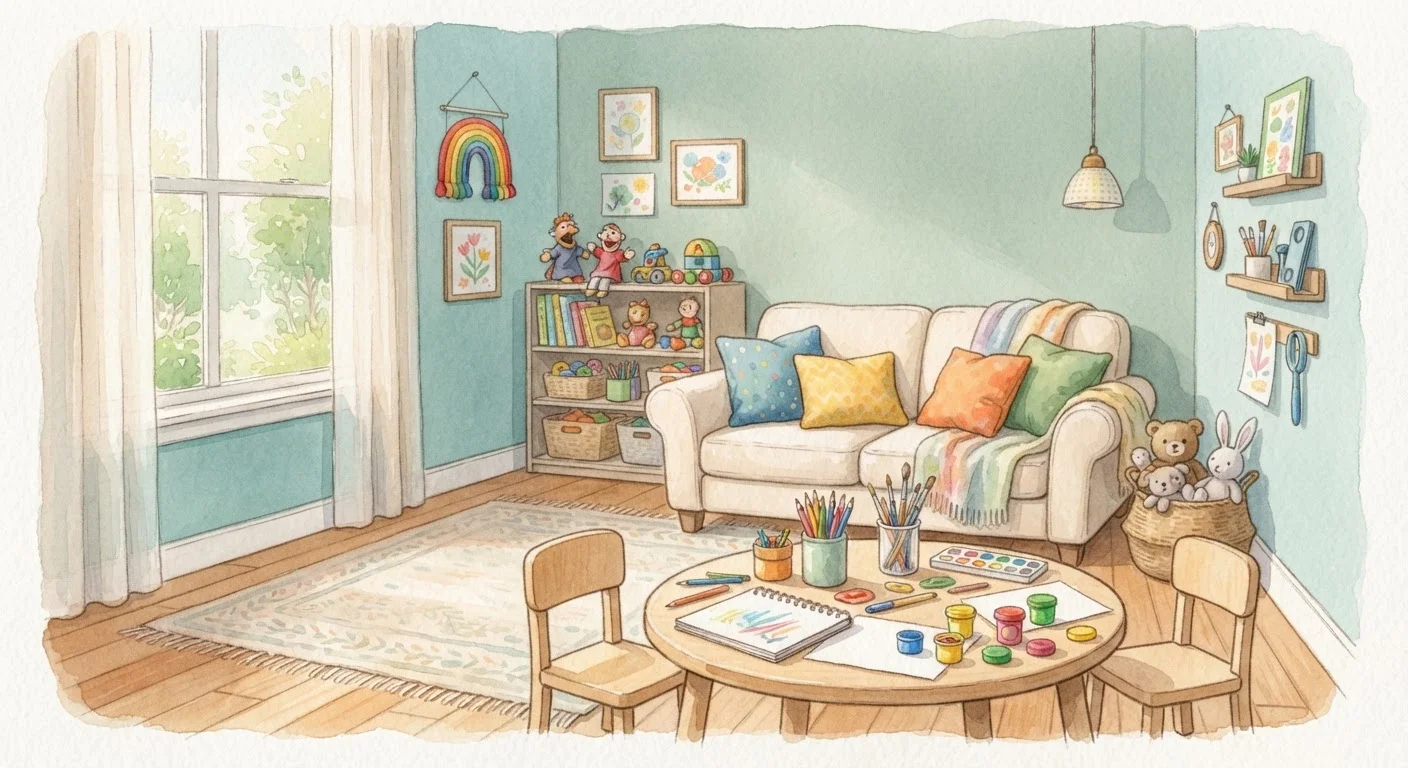
For younger children, play therapy is a common and well-researched approach. Through toys, art, sand trays, and storytelling, children express emotions they don't yet have words for. The therapist observes themes, gently reflects them back, and introduces coping strategies in ways that feel natural to the child.
Older children and adolescents are more likely to engage in talk-based therapies such as Cognitive Behavioral Therapy (CBT), which helps them recognize unhelpful thought patterns and practice more balanced responses. Mindfulness-based techniques and emotion regulation skills are also commonly woven in.
Sessions are typically 45-50 minutes, once a week to start. The pacing and methods adapt as the therapist gets to know your child. You may also want to explore whether individual or family therapy fits your situation, since sometimes a combination of both serves a family best.
Play therapy
A therapeutic approach for younger children where a trained therapist uses play activities to help children express and process emotions they may not yet be able to verbalize.
Cognitive Behavioral Therapy (CBT)
A structured, evidence-based form of talk therapy that helps people identify unhelpful thinking patterns and replace them with more balanced, realistic thoughts and behaviors.
Licensed Clinical Social Worker (LCSW)
A licensed mental health professional with a master's degree in social work who is trained to assess and treat emotional and behavioral conditions, including those in children.
Mandated reporter
A professional - including therapists - who is legally required to report suspected child abuse or a credible risk of harm, even when confidentiality would otherwise apply.
Emotion regulation
The ability to recognize, manage, and respond to emotional experiences in a healthy way - a key skill that child therapists actively teach during sessions.
Finding the Right Therapist for Your Family
Credential and fit both matter. Look for a licensed mental health professional who specializes in children and adolescents - credentials to look for include Licensed Clinical Social Worker (LCSW), Licensed Professional Counselor (LPC), Licensed Marriage and Family Therapist (LMFT), or a psychologist with a child focus.
Practical starting points include your child's pediatrician (who often maintains referral lists), your insurance provider's directory, or school counselors who may know local specialists. Community mental health centers can be an option when cost is a barrier.
Beyond credentials, temperament match matters. A therapist who feels warm and approachable to your child is more likely to build the trust that makes therapy effective. Many therapists offer a brief consultation call before committing to an intake appointment - use it to ask about their approach and experience with your child's specific concerns.
American Academy of Child and Adolescent Psychiatry (AACAP)
AACAP offers free, plain-language fact sheets for families on a wide range of child mental health topics, including how to find a child psychiatrist or therapist.
Psychology Today Therapist Finder
A searchable directory that allows families to filter by specialty (including child and adolescent therapy), insurance accepted, and location - useful for building an initial shortlist.
SAMHSA National Helpline
The Substance Abuse and Mental Health Services Administration offers a free, confidential 24/7 helpline (1-800-662-4357) that can connect families to local mental health services and referrals.
Preparing Your Child - and Yourself - for That First Session
Anxiety before the first appointment is completely normal - for children and parents alike. A little preparation goes a long way.
For your child, use simple, honest language. Something like: "We're going to meet someone whose job is helping kids figure out big feelings. You can ask them anything, and nothing you say will get you in trouble." Avoid framing it as a consequence or making it feel urgent or scary.
Practically, consider visiting the therapy office's website together so the space feels familiar. Let your child know they can ask questions before and after sessions. Avoid coaching them on what to say - therapists are trained to build rapport naturally, and over-preparation can make children feel they need to perform.
For yourself: prepare a brief summary of your child's history, current concerns, and any relevant family context. Therapists typically meet with parents first or separately to gather background before seeing the child alone. Also think about logistics - consistent scheduling, transportation, and who will handle pick-up - because regular attendance is one of the biggest factors in successful outcomes.
How Parents Stay Involved Without Undermining the Work
Your role doesn't end at drop-off. Parents are considered active partners in child therapy, even when sessions are private.
Most therapists provide parents with periodic updates - not verbatim session content, but the themes being worked on and strategies to reinforce at home. Ask your child's therapist how they prefer to communicate with parents and what you can do between sessions to support progress.
At home, focus on creating an environment where emotions are welcomed. You don't need to probe your child about what happened in therapy - that can feel invasive and may make them less willing to share. Instead, model emotional openness yourself. The Kids' Wellness hub has additional guidance on supporting your child's overall health and development in ways that complement professional care.
Resist the urge to measure progress week by week. Change in children's mental health often looks like fewer meltdowns over time, a child voluntarily using a coping strategy, or simply seeming a little lighter. These shifts can be subtle at first.
This article provides general health information for educational purposes only and is not a substitute for professional medical or mental health advice. If you have concerns about your child's emotional or behavioral health, consult a qualified healthcare or mental health professional.
Frequently Asked Questions
Children of almost any age can benefit from professional support - specialized therapists work with toddlers through teenagers. Techniques are adapted to developmental stage, so even very young children can participate meaningfully through play-based approaches.
There's no single answer, since duration depends on what the child is working through and how they respond. Some children make meaningful progress in a few months; others benefit from longer-term support. A therapist can give you a clearer picture after initial assessments.
Therapists maintain confidentiality to help children feel safe, but they are legally required to break confidentiality if there is risk of harm to the child or others. Therapists typically communicate general themes and progress with parents while protecting session specifics.
Psychologists typically hold doctoral degrees and may conduct formal psychological testing in addition to therapy. Licensed therapists (LCSWs, LMFTs, LPCs) hold master's degrees and focus primarily on counseling and behavioral interventions. Both can provide effective child therapy.
Keep it simple and positive: tell your child they'll be talking and playing with a person whose job is to help kids with big feelings. Framing it as something many children do - not something reserved for 'problems' - helps normalize the experience.
This depends on the child's age and the therapist's approach. Younger children may have a parent present initially, while older children often benefit from private sessions. Some therapists schedule brief parent check-ins at the start or end of sessions.
The content provided on our blog site traverses numerous categories, offering readers valuable and practical information. Readers can use the editorial team’s research and data to gain more insights into their topics of interest. However, they are requested not to treat the articles as conclusive. The website team cannot be held responsible for differences in data or inaccuracies found across other platforms. Please also note that the site might also miss out on various schemes and offers available that the readers may find more beneficial than the ones we cover.