

Why Lab Reports Feel So Confusing
When a lab report lands in your patient portal, it can feel like reading a foreign language - rows of abbreviations, numbers, and flags like H or L that seem alarming without any context. The good news is that once you understand the basic structure, most reports follow a predictable pattern that you can learn to navigate confidently.
Lab results are general health data points, not diagnoses. Interpreting them fully requires your provider's knowledge of your complete health history, current medications, and recent lifestyle factors. Think of learning to read your report as preparation for a more informed conversation - not a replacement for one. If you've ever felt similarly overwhelmed decoding other complex documents, you're not alone: the same methodical approach helps whether you're reading a credit report or a nutrition label.
What you will need
Step-by-Step: Making Sense of Your Results
Follow these steps the next time a lab report arrives. Having the report open in front of you as you work through each step will help.
Locate the Report Header
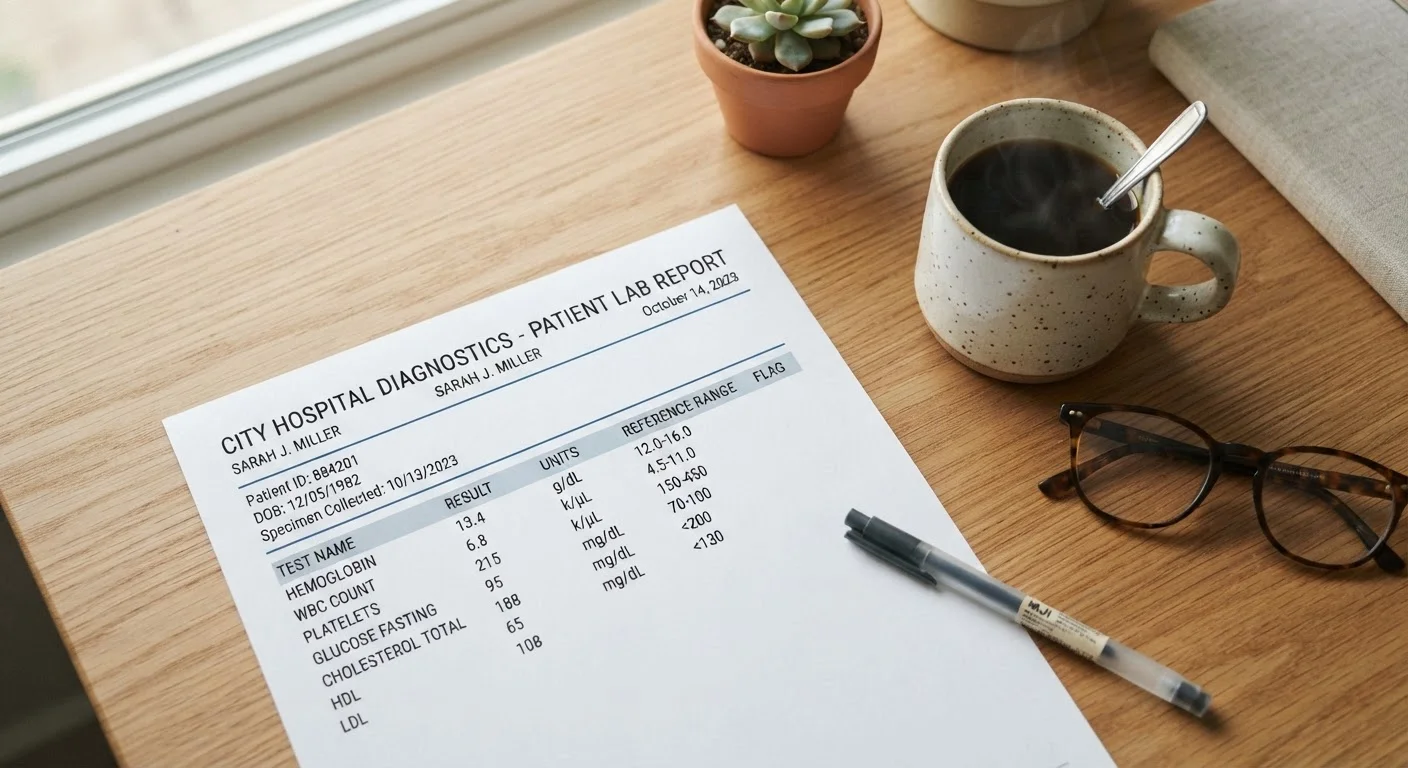
Find the top section of the report, which typically lists your name, date of birth, the ordering provider, the date the sample was collected, and the name of the laboratory. Confirming these details first ensures you're looking at the right report and that the sample was processed recently - older results may not reflect your current health status.
Identify the Test Name and Units
Each row represents one test. The left column names the test (e.g., Glucose), the next column shows your result, and a units column (e.g., mg/dL or mmol/L) tells you how the measurement is expressed. Units matter - the same number can mean very different things depending on the unit used.
Read the Reference Range
Next to or near your result, you'll see a reference range (e.g., 70-99 mg/dL). This range represents where most healthy adults in the test population fall - roughly 95% of a reference population. It is not a personal target set for you. Reference ranges can vary by laboratory, by age, by sex, and sometimes by pregnancy status.
Note Any Flags
A result outside the reference range is typically flagged with an H (high) or L (low), sometimes highlighted or printed in bold. A flag means the value warrants attention - it does not automatically mean you have a condition or that urgent action is required. Mild flags in one or two values are common and often explained by everyday factors like recent exercise, dehydration, or eating shortly before the blood draw.
Write Down Your Questions
For each flagged result, note the test name, your value, and the reference range. Then form a specific question: "My hemoglobin was flagged low - is this something we need to follow up on?" Specific questions help your provider give you targeted, useful answers rather than general reassurance.
Trends Matter More Than Single Values
A single result tells one part of the story. When your provider looks at several results over time, patterns become more meaningful than any individual number. If you have access to past results in your patient portal, compare trends rather than fixating on whether one value is a few points above the reference range.
Common Abbreviations and What They Mean
Most routine bloodwork panels include a Complete Blood Count (CBC) and a Comprehensive Metabolic Panel (CMP). Here are abbreviations you'll frequently encounter:
- WBC - White blood cell count; related to immune function.
- RBC - Red blood cell count; related to oxygen transport.
- HGB / HCT - Hemoglobin and hematocrit; indicate how well red blood cells carry oxygen.
- PLT - Platelet count; related to clotting.
- BUN / Cr - Blood urea nitrogen and creatinine; reflect kidney function.
- ALT / AST - Liver enzymes; elevated levels may prompt further evaluation.
- TSH - Thyroid-stimulating hormone; screens thyroid function.
- HbA1c - A longer-term marker of average blood sugar levels.
This is general health information only. Just as a single BMI number doesn't tell the whole story, no single lab value should be read in isolation.
Always Follow Up on Significantly Abnormal Results
If your report shows a result that is substantially outside the reference range - especially if paired with symptoms - contact your healthcare provider promptly rather than waiting. Lab reports in patient portals are released directly to patients, sometimes before a provider has reviewed them. A provider review is an essential step that should not be skipped.
After You've Read the Report
Once you've oriented yourself to the layout and flagged any values outside the reference range, write down specific questions before your next appointment. For example: "My ALT was flagged high - what does that mean given my current medications?" This kind of focused question leads to a much more useful clinical conversation than arriving with generalized worry.
If a result is significantly out of range and you're experiencing symptoms, contact your provider's office rather than waiting for a scheduled visit. Most practices have nurse lines or secure messaging that can help you triage quickly. Remember that lab values are one piece of a larger picture - your provider considers them alongside your symptoms, physical exam findings, and health history before drawing any conclusions.
This article is for general informational purposes only and does not constitute medical advice. Always consult a qualified healthcare professional for questions about your individual health or lab results.
The content provided on our blog site traverses numerous categories, offering readers valuable and practical information. Readers can use the editorial team’s research and data to gain more insights into their topics of interest. However, they are requested not to treat the articles as conclusive. The website team cannot be held responsible for differences in data or inaccuracies found across other platforms. Please also note that the site might also miss out on various schemes and offers available that the readers may find more beneficial than the ones we cover.