

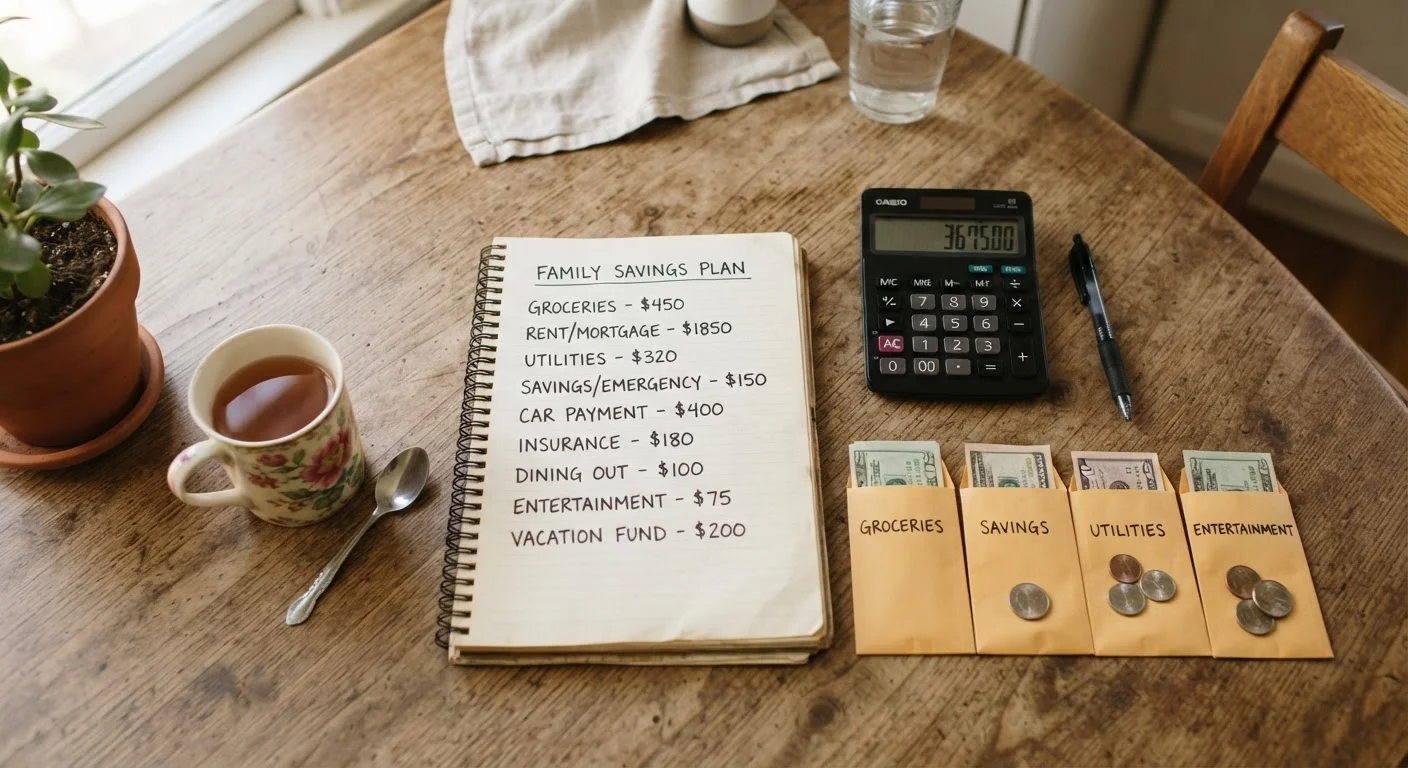
Why Predictable Expenses Still Surprise Most Families
Ask most families about their biggest budget headaches, and the answer is rarely rent or groceries - it's the expenses that come around every year yet still feel like surprises. Back-to-school shopping, car registration, holiday gifts, the annual insurance premium: these are entirely predictable, yet they routinely land as budget shocks because they weren't planned for month by month.
This is the problem sinking funds solve. Rather than scrambling to cover a $600 car service bill from a single paycheck, a sinking fund means that $600 was already waiting in a dedicated account - saved $50 at a time over twelve months. The bill arrives, and you simply pay it. No credit card, no stress, no budget disruption.
If you've noticed that certain expense categories keep slipping through your planning, our guide to spending categories most family budgets underestimate covers many of the same culprits that sinking funds are designed to address.
Start with One Fund, Not Five
If sinking funds are new to your budget, resist the urge to create one for every possible expense at once. Choose the single largest foreseeable expense coming in the next six to twelve months and build that fund first. Once the habit is established - and you see it work - adding additional funds becomes straightforward.
How to Set Up a Sinking Fund in Three Steps
Setting up a sinking fund doesn't require a financial adviser or a complex spreadsheet. The process has three straightforward steps.
- Name the expense and set a target. Choose a specific, known expense - say, holiday gifts - and decide on a realistic total. If you typically spend $400 on gifts each December, that's your target.
- Calculate your monthly contribution. Divide the target by the number of months until you need the money. $400 ÷ 10 months = $40 per month. That number becomes a fixed line in your monthly budget.
- Open a separate account or sub-account. Keeping sinking fund money separate from your checking account reduces the temptation to dip into it. Many banks and credit unions allow you to label savings sub-accounts by goal. If you want this process to run without thinking, automating the monthly transfer is a reliable approach.
Once one fund reaches its goal, you have a choice: close it and redirect those monthly dollars to a new fund, or keep it open and let it build a buffer for the following year.
1 in 3
Americans with no dedicated savings buffer
Federal Reserve surveys have consistently found that a significant share of U.S. adults would struggle to cover an unexpected $400 expense without borrowing - underscoring the value of planned saving for foreseeable costs.
$6,000+
Typical annual vehicle ownership costs beyond car payments
AAA's annual Your Driving Costs studies estimate that maintenance, fuel, tires, and fees can exceed several thousand dollars per year for an average vehicle - making a vehicle sinking fund one of the highest-priority categories for most families.
$890
Average U.S. household holiday spending
National Retail Federation consumer surveys routinely place average holiday spending well above $800 per household - an entirely predictable annual cost that a sinking fund can eliminate as a budget disruption.
Common Sinking Fund Categories for Families
A sinking fund can be created for virtually any foreseeable expense. These are among the most useful categories for American families:
- Vehicle maintenance and registration - oil changes, tires, annual DMV fees
- Home repairs and maintenance - HVAC servicing, appliance replacement, seasonal upkeep
- Back-to-school costs - supplies, clothing, activity fees, technology
- Holiday and gift spending - birthdays, religious holidays, family gatherings
- Family vacations - flights, lodging, activities
- Medical and dental costs - copays, deductibles, vision care, orthodontics
- Pet care - annual vet visits, vaccinations, grooming
If you're working through a broader savings plan, these categories fit naturally alongside the framework described in our guide to building a family savings plan from scratch.
Sinking Funds vs. Emergency Funds: Understanding Both
One of the most common points of confusion is how sinking funds relate to an emergency fund. They serve completely different purposes and both belong in a healthy family financial plan.
An emergency fund is a financial safety net for genuinely unexpected events - job loss, an urgent medical situation, or a sudden major repair. It's not meant to be planned or depleted deliberately. A sinking fund, by contrast, is for expenses you fully expect - you simply haven't paid for them yet. Using an emergency fund for predictable costs drains a safety net that should be available when something genuinely unpredictable strikes.
For a clear breakdown of how much to keep in emergency reserves and common misconceptions around them, see emergency fund myths families keep believing.
Running both simultaneously is the goal. Your emergency fund stays untouched and stable; your sinking funds grow and are drawn down on schedule. Together, they cover the full spectrum from the predictable to the unforeseen.
This article is for general informational and educational purposes only. It does not constitute personalized financial advice. Consult a qualified financial professional for guidance specific to your situation.
Frequently Asked Questions
An emergency fund covers unexpected, unplanned expenses - a job loss, a sudden medical bill, or an urgent repair you couldn't foresee. A sinking fund is for expenses you know are coming, like annual car registration or holiday gifts. Both serve important but distinct roles in a family's financial plan.
There's no formal limit - families can maintain as many sinking funds as their budget allows. In practice, most households start with two or three high-priority goals and add more over time. The key is ensuring total monthly contributions across all funds fit comfortably within your budget.
Many families keep sinking funds in a separate savings account - or multiple sub-accounts if their bank supports them - to keep the money clearly separated from day-to-day spending. A <a href="/family-finances/saving-and-goals/savings-account-types-families-should-know-about">basic savings or high-yield savings account</a> works well for this purpose.
Yes, though the contribution amounts will be smaller. Even setting aside $10-$20 per month toward a specific goal is meaningful and prevents a future lump-sum strain on your budget. Prioritizing one or two funds first is a sensible approach when margin is limited.
No special tools are required. A simple spreadsheet, a budgeting notebook, or a note on your phone can track sinking fund progress effectively. Some families use budgeting apps that support multiple savings envelopes or buckets, but the underlying concept works without any paid software.
You can redirect sinking fund money if a genuine priority shift occurs, but doing so frequently undermines the purpose of the fund. Keeping sinking funds in a separate account from everyday money - and labeling each clearly - helps preserve the funds for their intended purpose.
The content provided on our blog site traverses numerous categories, offering readers valuable and practical information. Readers can use the editorial team’s research and data to gain more insights into their topics of interest. However, they are requested not to treat the articles as conclusive. The website team cannot be held responsible for differences in data or inaccuracies found across other platforms. Please also note that the site might also miss out on various schemes and offers available that the readers may find more beneficial than the ones we cover.