

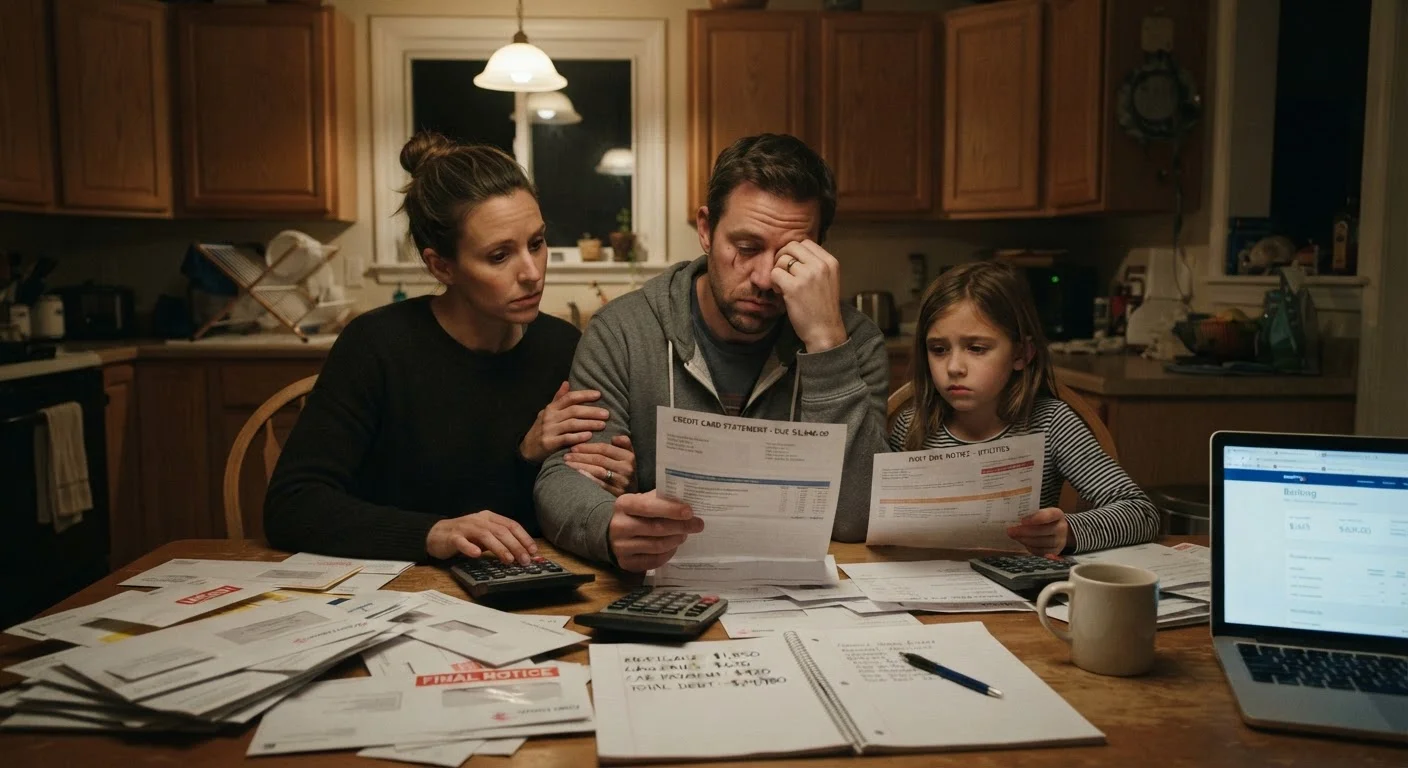
Why Minimum Payments Feel Like the Safe Option
When a credit card statement arrives, the minimum payment figure stands out - it's small, manageable, and stamped with a due date. For families juggling groceries, utilities, and childcare, that number feels like a lifeline. Making it on time means no late fee, no penalty rate, and a green checkmark on your credit report. It feels responsible.
But that sense of safety is largely an illusion. Credit card issuers are required by law to show you how long it will take to pay off your balance if you only make minimum payments - and for many households, that disclosure reveals decades, not months. The minimum is designed to keep you a customer, not to set you free from debt.
This isn't a character flaw or a sign of financial ignorance. The minimum payment structure is deliberately simple, and the math behind it is deliberately opaque. Understanding why this trap exists - and how to sidestep it - is one of the most valuable financial skills a family can develop. See our complete overview of family debt management for the broader picture of how debt accumulates and how families can systematically work through it.
Common Mistakes Families Make With Minimum Payments
The following errors appear repeatedly in household debt patterns. Recognizing them is the first step toward correcting course.
Treating the minimum payment as the target payment rather than the floor.
Why it happens: Card statements display the minimum prominently, and paying it feels like fulfilling your obligation. Many people mentally equate "meeting the requirement" with "handling the debt."
Ignoring the APR because the monthly payment seems small.
Why it happens: Annual percentage rates are quoted yearly, but the damage compounds monthly. A 24% APR sounds abstract until you calculate what it costs on a $3,000 balance over time.
Making minimum payments on multiple cards while never fully retiring any single balance.
Why it happens: Spreading payments across all cards feels fair and organized, but it can mean none of the balances ever shrinks meaningfully - interest keeps pace with payments across the board.
Continuing to use a card actively while only paying the minimum on its existing balance.
Why it happens: Life is expensive, and a credit card offers immediate relief. Families often tell themselves they'll pay it down "next month" while adding new charges that reset the payoff timeline.
Assuming minimum payments protect your credit score as well as higher payments would.
Why it happens: On-time payment history is the largest factor in most credit scores, so paying the minimum on time does help - but high credit utilization (the ratio of your balance to your credit limit) simultaneously drags your score down.
Deferred Interest Offers Can Amplify This Risk
Some retail financing offers advertise "no interest if paid in full" within a promotional period. If the balance is not fully cleared by the deadline, deferred interest - covering the entire promotional period - may be charged at once. Making only minimum payments on these accounts can result in a large, unexpected interest charge. Review the terms of any financing agreement carefully, and consult what families should understand about financing household purchases before signing.
This article is for general financial education only and does not constitute personalized financial, legal, or tax advice. Consult a qualified financial professional before making decisions about your specific debt situation.
The Math That Changes Everything
~$6,500
Average U.S. household credit card balance
Federal Reserve consumer credit data consistently shows average revolving credit balances in this range for households that carry a balance month to month.
20%+
Average credit card APR in recent years
Federal Reserve data has shown average credit card interest rates exceeding 20% annually, making compound interest a significant cost for families carrying balances.
15+ years
Potential repayment timeline on minimum payments
For a $5,000 balance at a high APR, paying only the minimum can extend repayment well beyond a decade, with total interest often exceeding the original balance.
Compound interest - interest charged on both your principal balance and any previously accrued interest - is the engine powering this cycle. On a typical credit card with a high annual percentage rate (APR), the majority of your minimum payment may go entirely to interest, leaving the principal balance nearly untouched month after month.
A useful mental shift: instead of asking "Can I afford the minimum this month?" ask "How much of my payment is actually reducing what I owe?" Your card's monthly statement is required to show this breakdown. Reading that line item regularly can be a powerful motivator.
Families who struggle to pay more than the minimum often share common structural patterns - irregular income, competing financial priorities, or the psychological weight of feeling overwhelmed. Our article on why families struggle to pay down debt even with good intentions explores these patterns candidly. Recognizing them early makes a real difference.
Once you're ready to move beyond the minimum, exploring structured repayment approaches is a natural next step. The debt avalanche vs. debt snowball comparison walks through two proven strategies and how each fits different household situations. Even adding a modest fixed amount above your minimum - consistently - can cut years off your repayment timeline and save hundreds or thousands in interest.
The content provided on our blog site traverses numerous categories, offering readers valuable and practical information. Readers can use the editorial team’s research and data to gain more insights into their topics of interest. However, they are requested not to treat the articles as conclusive. The website team cannot be held responsible for differences in data or inaccuracies found across other platforms. Please also note that the site might also miss out on various schemes and offers available that the readers may find more beneficial than the ones we cover.